From Selling Newspapers in Rameswaram to Rashtrapati Bhavan: The Life of Dr Kalam
Dr A.P.J. Abdul Kalam rose from a modest home in Rameswaram to lead India's missile programme and become its 11th President. He inspired millions of young Indians.
By IndianGaurav team ·
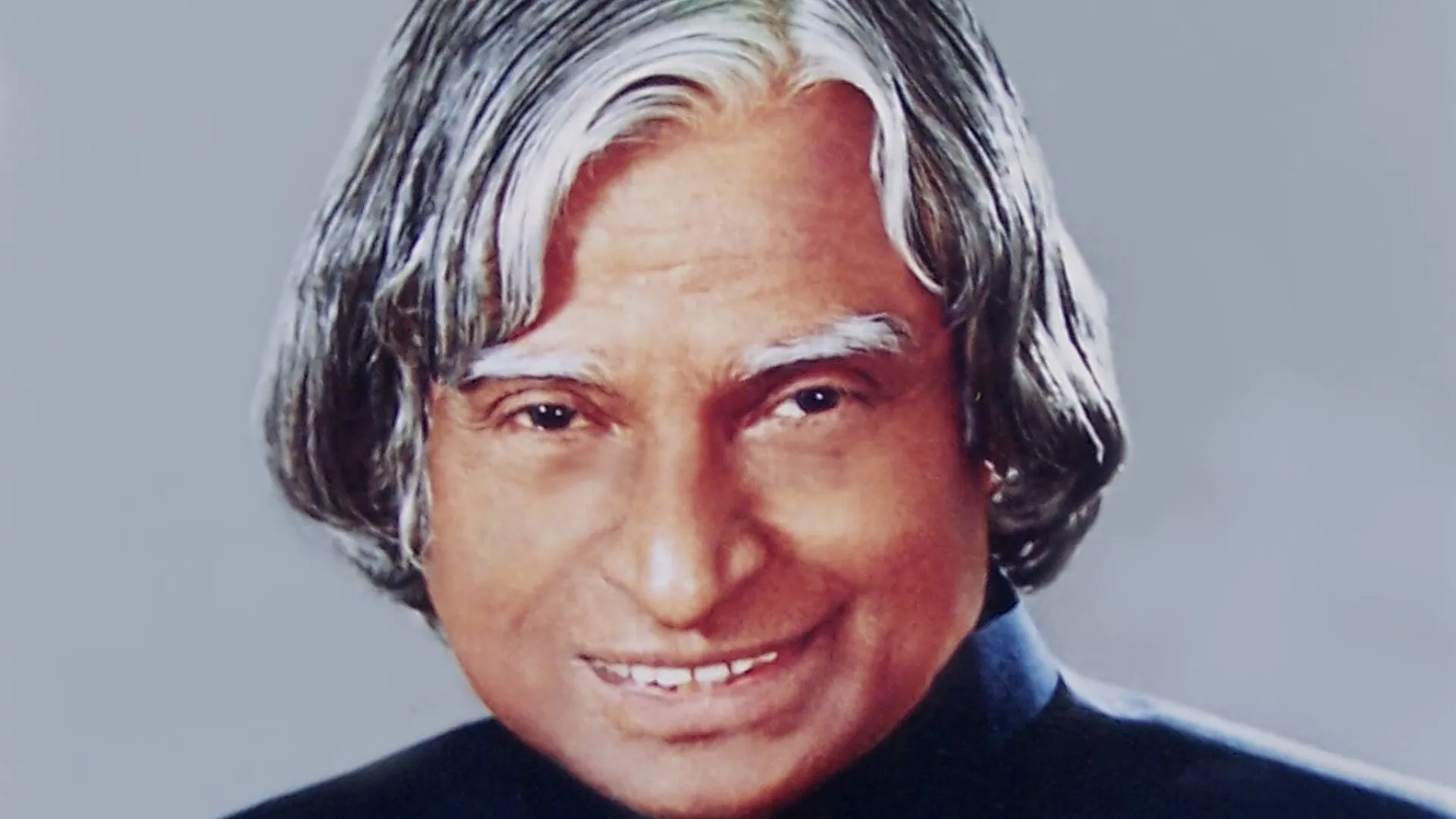
He was a boy from a small island town who grew up to build India’s rockets and missiles, received the Bharat Ratna and became the 11th President of India. Through all of it, he remained the curious, humble boy from Rameswaram.
His name was Avul Pakir Jainulabdeen Abdul Kalam, known to the world as Dr A.P.J. Abdul Kalam, and to millions of Indians simply as Kalam sir.
A childhood by the sea
Kalam was born on 15 October 1931 in Rameswaram, Tamil Nadu [1][2]. His father ran a boat and ferry business, and the family, once well off, lived in poverty during his childhood [1].
Studies and a dream of flying
Kalam studied aeronautical engineering at the Madras Institute of Technology [2]. He dreamed of being a fighter pilot. By his own account, he came ninth in the Indian Air Force selection when only eight places were available, and later wrote that he had failed to realise that dream [7]. He took the other path open to him, as an engineer in defence research.
Launching India into space
Kalam joined the Indian Space Research Organisation (ISRO) in 1969, and became project director of the SLV-3, the first satellite launch vehicle designed and built in India [1].
Its first flight, on 10 August 1979, did not reach orbit because the second-stage control system failed [5]. On 18 July 1980, the next SLV-3 placed the Rohini satellite in orbit from Sriharikota [3][4], making India one of a small group of nations able to launch their own satellites.
Kalam later told a story about leadership from those years. After the 1979 failure, ISRO chairman Satish Dhawan faced the press and took the blame himself. A year later, after the success, he asked Kalam to speak to the press instead [6].
The Missile Man of India
In 1982, Kalam moved to the Defence Research and Development Organisation to lead the Integrated Guided Missile Development Programme, which produced several successful missiles, including Agni and Prithvi [1][2]. That work earned him the popular title “Missile Man of India.”
He received the Padma Bhushan in 1981, the Padma Vibhushan in 1990 and India’s highest civilian honour, the Bharat Ratna, in 1997 [1].
The People’s President
On 25 July 2002, Kalam became the 11th President of India, serving until 2007 [1][2]. He had never held political office. He opened Rashtrapati Bhavan to ordinary people, especially children, met students wherever he travelled and answered their questions with warmth and humour, and came to be known as the “People’s President.”
A teacher at heart
After his presidency, Kalam went back to what he loved most: teaching and inspiring young people. His autobiography, Wings of Fire (1999), became one of India’s most widely read books [1].
His last lecture
On 27 July 2015, Kalam collapsed while giving a lecture to students at the Indian Institute of Management in Shillong, and died soon afterwards, aged 83 [1][3]. He died doing what he loved: talking to young people. He was laid to rest in Rameswaram.
Why it matters
Dr Kalam’s life showed that talent and hard work can carry a person from the humblest beginnings to the highest office in the land. Above all, he believed in the power of young Indians to change their country. Every student who dreams of building rockets or solving hard problems carries a spark of the fire he worked to light.
Sources
- [1] A.P.J. Abdul Kalam — Encyclopaedia Britannica. Accessed 11 October 2026.
- [2] Dr. A.P.J. Abdul Kalam — profile — President's Secretariat, Government of India. Accessed 11 October 2026.
- [3] Cabinet condoles death of former President Dr. A P J Abdul Kalam — Prime Minister's Office, Government of India. Accessed 11 October 2026.
- [4] SLV-3E1 — Indian Space Research Organisation (ISRO). Accessed 11 October 2026.
- [5] List of SLV Launches — Indian Space Research Organisation (ISRO). Accessed 11 October 2026.
- [6] The business case for trust — Business Standard. Accessed 11 October 2026.
- [7] I had failed to realise my dream of becoming air force pilot: Kalam — Business Standard. Accessed 11 October 2026.
Last updated . Report a correction