Runways Powered by the Sun: Kerala's Airport That Showed the World a Greener Way
In 2015, Cochin International Airport in Kerala became the world's first airport to run fully on solar power. The UN later gave it its top environmental honour.
By IndianGaurav team ·
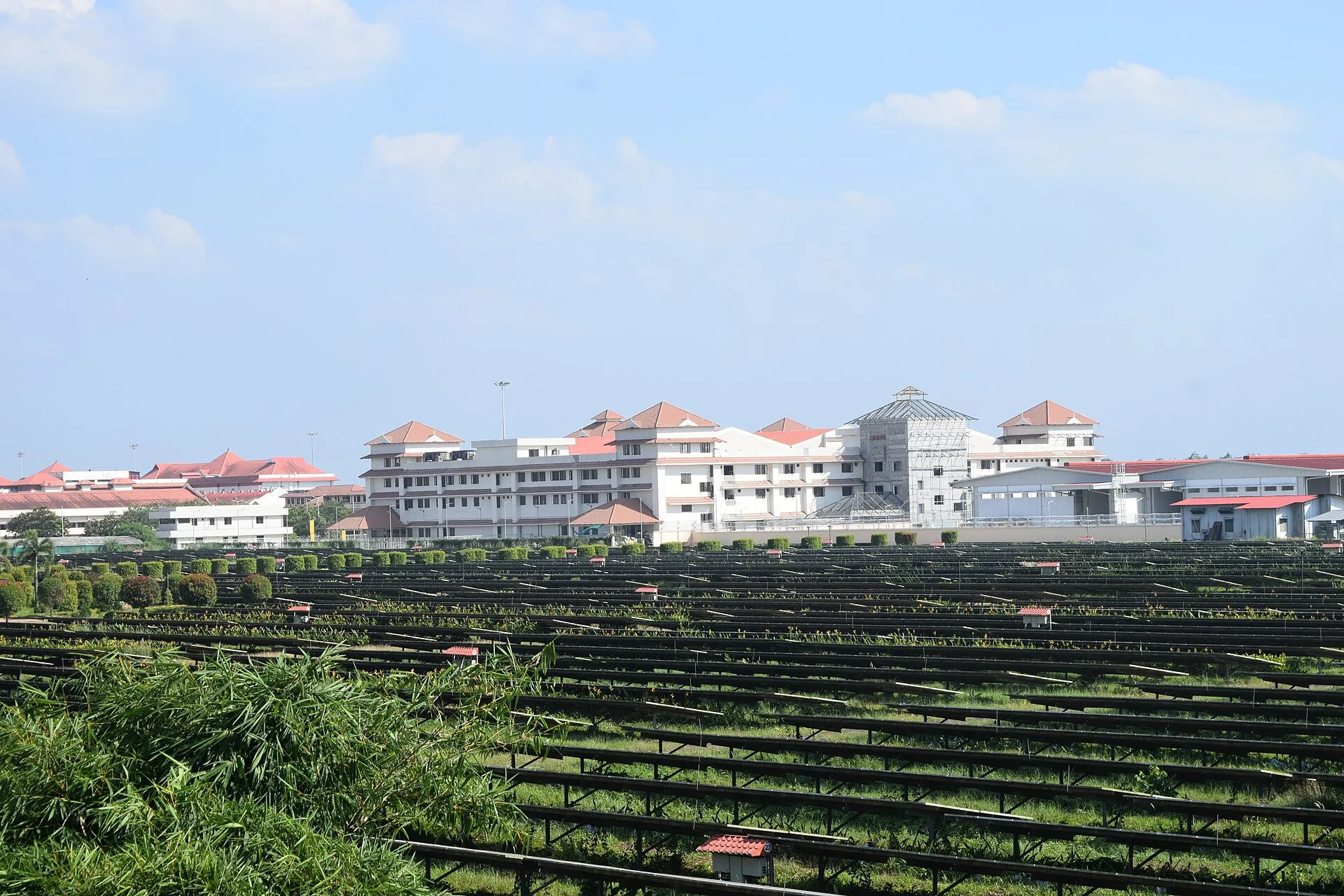
Airports use a lot of electricity. Runway lights, air-conditioned terminals, baggage belts, security scanners, escalators, shops and restaurants all need power, all day and all night. Most airports around the world get that power from the grid, much of it produced by burning coal or gas.
In 2015, an airport in Kerala decided to do things differently. Cochin International Airport became the world’s first airport to run fully on solar power [1].
Three years later, the United Nations gave it the Champions of the Earth award, its highest environmental honour [1][3].
An airport built by the people
Cochin International Airport, at Nedumbassery near Kochi, was already unusual before it went solar.
In the 1990s, Kochi badly needed a bigger airport. The old one, run by the Navy, was too small for growing traffic, including many Keralites working in the Gulf and flying home [1].
The solution was bold. The airport was built as a public-private partnership, the first airport in India to be developed this way [1]. The Government of Kerala became the largest investor. The rest of the money came from more than 10,000 shareholders, many of them non-resident Indians from dozens of countries, who believed in the project [1].
The airport opened in 1999 [1]. Today, it is the busiest airport in Kerala, handling the majority of the state’s air passengers, and one of India’s busiest for international traffic [1].
The idea of going solar
By the early 2010s, the airport’s electricity bills were large and rising. Its managing director at the time, V.J. Kurian, and his team began looking for ways to cut costs and reduce the airport’s impact on the environment [1][3].
They started small. In 2013, the airport installed solar panels on the roof of its arrivals terminal [1]. The results were encouraging. So the team asked a bigger question: could the airport produce all the electricity it used from the sun?
Building a solar farm
The airport had land near its cargo complex that could be used. Over the following months, rows of solar panels were installed across that land.
In August 2015, the airport switched on a 15-megawatt solar power plant [1]. It produced enough electricity during the day to cover the airport’s total consumption over the year. On sunny days, extra power went into the state grid. At night and on cloudy days, the airport drew power back from the grid. Over a full year, what it gave and what it took balanced out, making it energy neutral [1][2].
In the years that followed, the airport kept adding more solar capacity, including panels on canals, rooftops and a solar carport for vehicles. It roughly doubled its solar production within a couple of years [1]. In 2017, it became the first airport in the world to have a solar carport [1].
Farming under the panels
One of the most charming features of the Cochin airport project is what grows under the panels.
Instead of leaving the land beneath them bare, the airport began growing vegetables there. Crops such as cabbages, pumpkins, beans and other vegetables are grown between and under the solar rows. The plants keep dust down, which helps the panels work better, and the produce is harvested and sold. This combination of solar power and farming has attracted attention from experts looking for ways to use land more efficiently.
A champion of the Earth
In 2018, the United Nations Environment Programme named Cochin International Airport as a winner of its Champions of the Earth award, in the category of entrepreneurial vision [1][3]. The award recognised the airport’s leadership in using sustainable energy.
The same year, Prime Minister Narendra Modi and French President Emmanuel Macron were also named Champions of the Earth for their work on the International Solar Alliance [3]. It was a proud year for India on the global environmental stage.
Inspiring others
Cochin’s success has made it a widely cited example for airports looking to cut their emissions [3].
The airport has also gone further, setting up small hydroelectric projects and exploring other forms of clean energy.
What made it work
Several things helped Cochin airport succeed:
- Leadership with vision. The management was willing to try something no other airport had done.
- A practical approach. They started with a small rooftop project, learned from it, and then scaled up.
- Smart use of the grid. Instead of expensive batteries, they used the state grid as a kind of bank for their electricity.
- Good economics. The solar plant was expected to pay for itself through lower electricity bills within a few years.
Lessons for other organisations
Cochin’s experience offers lessons that go well beyond airports. Hospitals, universities, factories, railway stations and government offices all use large amounts of electricity and often have rooftops, car parks or spare land that could hold solar panels.
The airport showed that clean energy does not have to be a costly gesture. Done well, it can lower bills, protect against rising power prices and reduce pollution at the same time. It also showed that a public institution, answerable to thousands of shareholders, could take a calculated risk and make it pay off.
For India, a country with abundant sunshine and fast-growing energy needs, that is an important message.
Why it makes India proud
When people think of clean energy pioneers, they often think of large companies or wealthy nations. Cochin’s story shows that leadership can come from anywhere, including a regional airport in Kerala that was itself built with the savings of ordinary people.
Every time a plane lands at Kochi at night, its runway lights are, in a sense, powered by the sunshine of the day before. It is a quiet, everyday reminder that India can show the world new ways of doing things.
Sources
- [1] Cochin International Airport — Wikipedia. Accessed 11 October 2026.
- [2] About CIAL — Cochin International Airport Limited. Accessed 11 October 2026.
- [3] UN awards 'Champion of Earth Prize' to Cochin International Airport — The News Minute. Accessed 11 October 2026.
Last updated . Report a correction