Two Billion Jabs: How India Pulled Off the World's Biggest Vaccination Drive
In July 2022, India crossed 200 crore COVID-19 vaccine doses, a feat built on health workers, homegrown vaccines and the CoWIN platform.
By IndianGaurav team ·
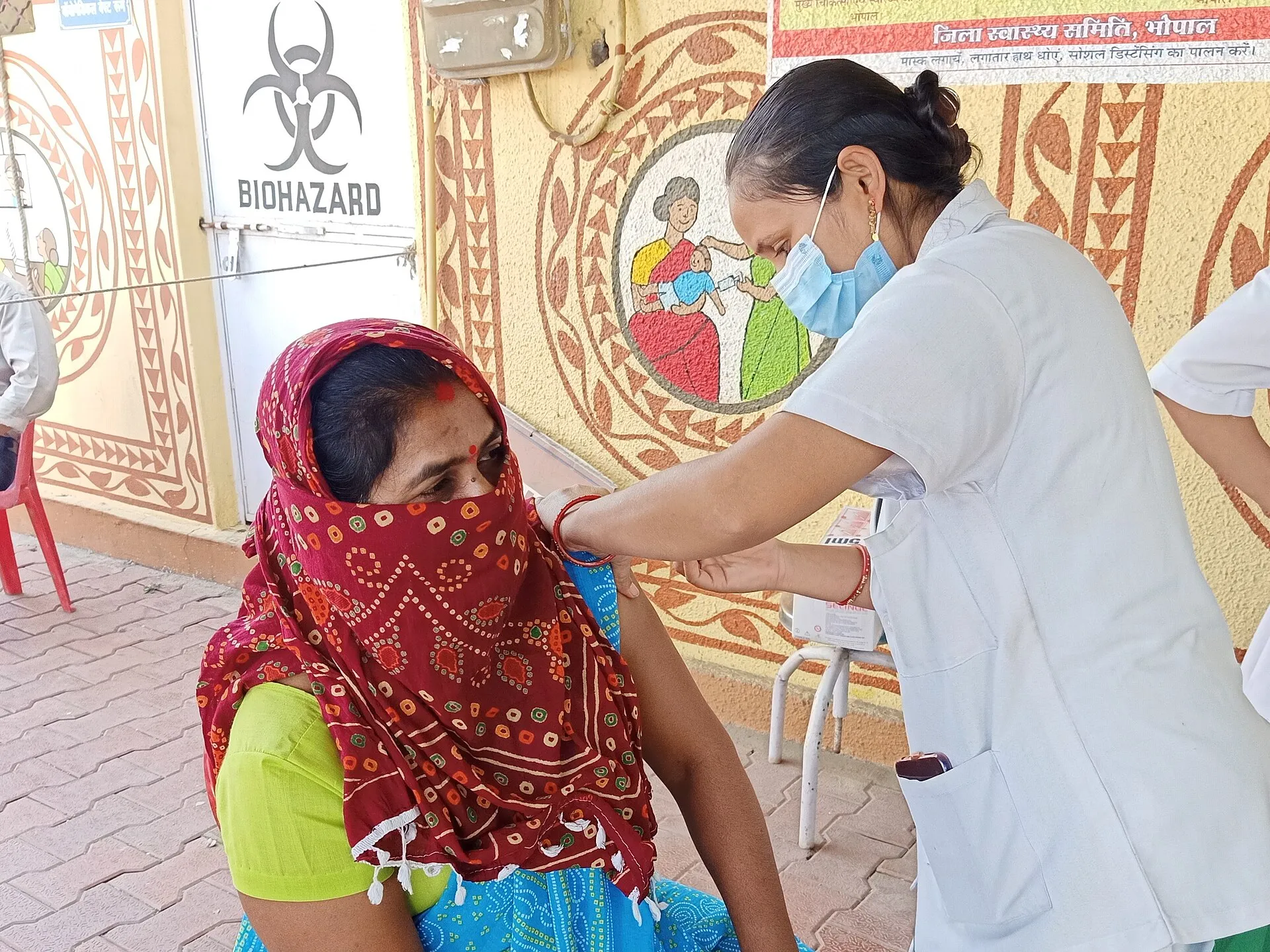
In early 2021, the world was watching India with worry. The country had nearly 1.4 billion people, crowded cities, remote villages, and a health system already stretched by the pandemic. Many experts wondered how India could possibly vaccinate so many people in a reasonable time.
Eighteen months later, on 17 July 2022, India crossed 200 crore (2 billion) doses of COVID-19 vaccine [1][3]. The World Health Organization congratulated the country on the milestone [1]. By the time the drive wound down, India had given well over 220 crore doses [3].
It was one of the largest public health campaigns in history. And it was carried out by the people of India: doctors and nurses, ASHA and anganwadi workers, scientists, drivers, volunteers and ordinary citizens who stood in line.
The starting line
India’s vaccination drive began on 16 January 2021 [3]. The first in line were health workers, followed by frontline workers such as police, sanitation staff and others who had kept the country running through lockdowns.
The drive then opened in stages: first to people over 60 and those over 45 with certain health conditions, then to everyone over 45, and from May 2021 to all adults [3]. Later, it was extended to teenagers and children, and booster doses were offered.
Vaccines made in India
One reason India could move at such scale was that it made most of its own vaccines.
- Covishield, the Oxford-AstraZeneca vaccine, was manufactured by the Serum Institute of India in Pune, which is the world’s largest vaccine maker by number of doses [3].
- Covaxin was developed and made in India by Bharat Biotech in Hyderabad, together with the Indian Council of Medical Research [3]. It was among the first COVID-19 vaccines developed entirely in a developing country.
Later, other vaccines were added, including ZyCoV-D by Zydus Cadila, described as the world’s first DNA-based vaccine for COVID-19 to be approved for human use [3], and Corbevax by Biological E.
Having vaccines produced at home meant India did not have to wait in line for supplies from abroad, and could adjust production to its own needs.
CoWIN: a digital backbone
Vaccinating hundreds of millions of people requires more than vaccines. It requires knowing who has been vaccinated, when they need the next dose, where vaccines are stored, and how many are left.
India built CoWIN, a digital platform that handled registration, appointment booking, recording doses and issuing certificates [2]. Its features included [2]:
- Simple online registration and choice of vaccination centre and vaccine.
- Vaccine certificates delivered as a QR code by text message or printed at the centre.
- Tools for vaccinators to verify people, record doses and report side effects.
- The option for people without internet access or identity documents to register at any health centre.
- Real-time dashboards showing coverage, stocks and wastage.
Behind CoWIN was an earlier system called eVIN, the Electronic Vaccine Intelligence Network, which India had developed over several years with support from UNDP and Gavi to track vaccine stocks and temperatures across the country [2]. That experience gave the government confidence to manage a supply chain of this size.
India later offered CoWIN as a digital public good to other countries interested in using it [2].
Reaching every corner
The hardest part of the campaign was the “last mile”: getting vaccines to people in remote areas while keeping them at the right temperature.
Health workers trekked across mountains in the Himalayas, crossed rivers by boat in Assam and Bihar, and walked through forests in tribal areas to reach villages. Pictures of nurses wading through streams with cold boxes on their shoulders became symbols of the drive. Drones were tested to deliver vaccines to hard-to-reach places in states such as Manipur.
Special camps were held in workplaces, markets, places of worship and even at people’s doorsteps under the Har Ghar Dastak (knock on every door) campaign, which aimed to reach those who had missed their doses.
Milestones along the way
The numbers grew at remarkable speed. Doses rose from 10 crore to 100 crore between April and October 2021 [2][3]. India crossed 100 crore doses on 21 October 2021, a moment marked with celebrations across the country [3].
On some days, India gave more than two crore doses in a single day [3].
By March 2022, more than 64 per cent of the population had received two doses [2]. By July 2022, the total passed 200 crore [1].
Vaccine Maitri: helping the world
India also shared its vaccines with other countries. Under the Vaccine Maitri (vaccine friendship) initiative, it supplied doses to neighbouring and developing countries, both as gifts and commercially, and through the global COVAX programme [3]. For many smaller nations, these were among the first vaccines they received.
Challenges and lessons
The drive was not without difficulties. During the severe second wave in 2021, supplies were tight and many people struggled to get appointments, and vaccine hesitancy had to be overcome in some communities [3].
These struggles make the final achievement even more notable. Despite the challenges, the country adapted, increased production and kept going.
What the drive left behind
The vaccination campaign left India with more than protection against one virus. It strengthened cold-chain storage across the country, trained large numbers of health workers in digital tools, and showed how technology can support public health at enormous scale [2].
The experience of CoWIN and eVIN has since been used to improve India’s routine immunisation programme for children and pregnant women, making it easier to track who has received which vaccine and when.
Why it makes India proud
The COVID-19 vaccination drive showed what India can achieve when science, industry, technology and public service work together.
Its real heroes were not those in conference rooms but those in the field: the ASHA worker who went door to door, the nurse who gave hundreds of injections a day, the driver who carried cold boxes over broken roads, and the scientist who worked through nights in a laboratory.
Two billion doses is a number that is hard to imagine. Behind every one of them was a person protected and a health worker who made it happen.
Sources
- [1] India reaches 200 crore COVID vaccination milestone — The Quint. Accessed 11 October 2026.
- [2] India's fight against pandemic aided by successful CoWIN app — UNDP. Accessed 11 October 2026.
- [3] COVID-19 vaccination in India — Wikipedia. Accessed 11 October 2026.
Last updated . Report a correction