A 4,500-Year-Old City That Saved Every Drop of Rain: The Secrets of Dholavira
Dholavira in Gujarat was one of the largest cities of the Harappan civilisation. Its clever water systems still impress engineers today.
By IndianGaurav team ·
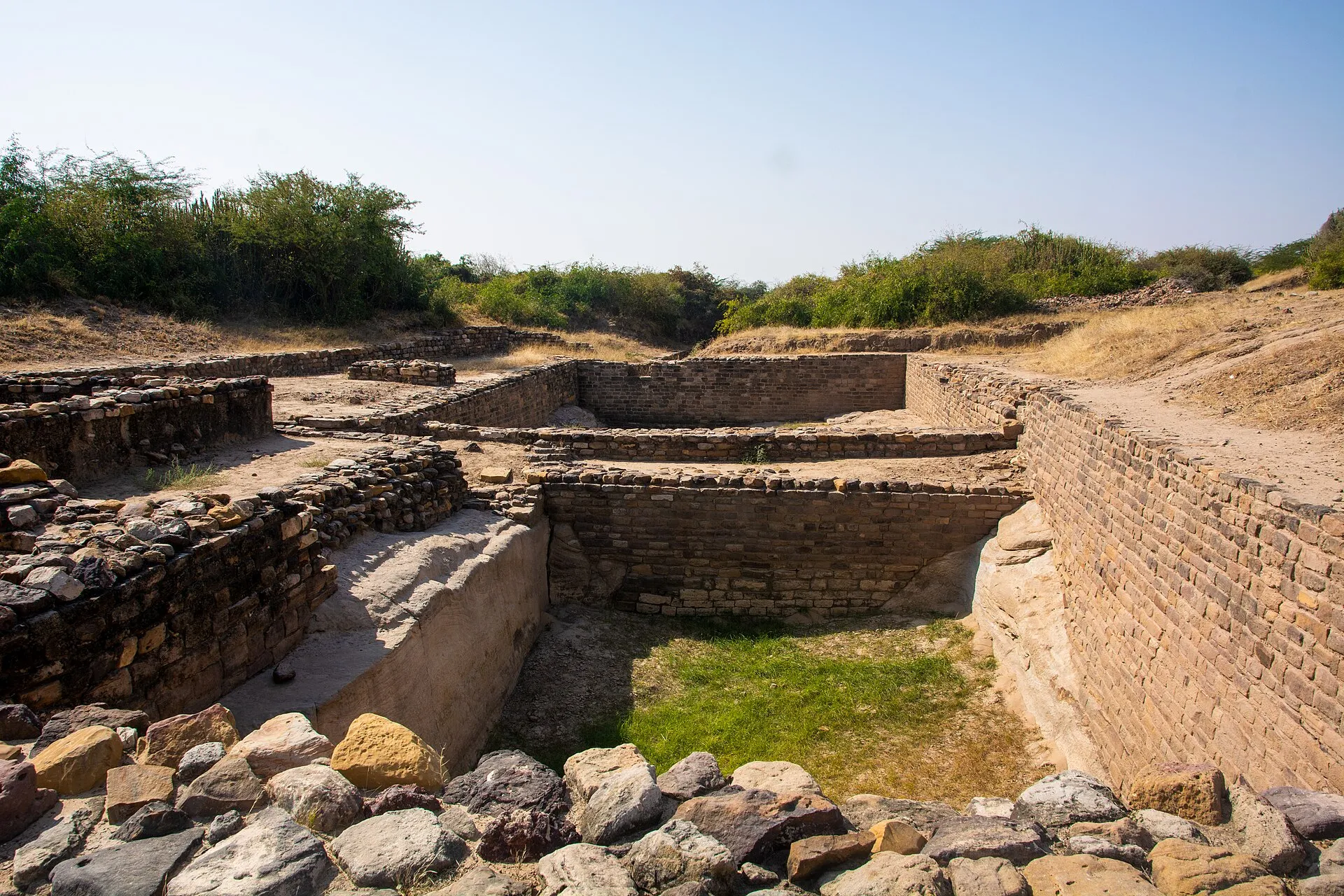
In the white salt desert of the Rann of Kutch in Gujarat lies a dry, rocky island called Khadir. Rain is scarce, and for most of the year the land is parched.
About 5,000 years ago, a thriving city stood here, with streets, houses, workshops, a fortified citadel and an ingenious system for catching and storing water. Its ruins are now known as Dholavira.
In July 2021, UNESCO inscribed Dholavira: a Harappan City on its World Heritage List [1]. It became India’s 40th World Heritage Site [2].
A city of the Harappan civilisation
The Harappan, or Indus Valley, civilisation was one of the world’s earliest urban cultures, alongside ancient Egypt and Mesopotamia. Its people built planned cities, traded over long distances and used a script that has never been deciphered.
Dholavira was lived in from about 3000 BCE to 1500 BCE [1]. Of the more than 1,000 Harappan sites found so far, it is among the largest, and UNESCO calls it one of the best-preserved towns of its age in South Asia [1].
Discovery and excavation
The Archaeological Survey of India (ASI) found the site in 1967 [4]. Systematic digging began only in 1990: over thirteen seasons, to 2005, archaeologist R.S. Bisht led the excavations that revealed the city [3].
A carefully planned city
Dholavira has two parts: a walled city and a cemetery to its west [2]. Inside the walls, a strongly fortified citadel stood above separate residential areas, a layout that points to a society divided into ranks [1].
Its people traded far beyond Kutch. Khadir’s island position gave them access to raw materials and to sea routes towards Magan (today’s Oman) and Mesopotamia [1]. Excavators found bead-making workshops and objects of copper, shell, semi-precious stone, gold and ivory [1].
The cemetery is unusual. Most of its graves are memorials, cenotaphs without bodies, built in six different styles, which UNESCO says reflects a distinctive Harappan view of death [1].
Masters of water
Dholavira’s greatest achievement may be how it handled water [1].
In a land with little rain, the city’s builders diverted water from seasonal streams, collected the scanty rainfall and tapped groundwater. They stored it in large reservoirs cut into the rock along the city’s eastern and southern walls [1]. Rock-cut wells, the most impressive inside the citadel, are among the oldest of their kind [1].
The ancient signboard
One of Dholavira’s most famous finds is a row of ten Harappan signs, each about 37 centimetres tall, discovered near the northern gate of the citadel. They were made of white gypsum pieces, set like mosaic tiles into what was probably a wooden board about 3 metres long [3].
It has been called one of the world’s oldest signboards. Since the Harappan script has not been deciphered, nobody knows what it says.
Visiting Dholavira
Dholavira is in the Kutch district of Gujarat, a long drive from Bhuj across the flat Rann. The ASI runs a small museum at the site [4].
Why it matters
More than four thousand years ago, people on a dry island in Kutch built a planned city with an advanced water system, and kept it going for centuries. In an age of water shortages, their care with every drop of rain feels surprisingly modern.
Sources
- [1] Dholavira: a Harappan City — UNESCO World Heritage Centre. Accessed 11 October 2026.
- [2] India gets its 40th World Heritage Site — Press Information Bureau, Government of India. Accessed 11 October 2026.
- [3] Dholavira and Its Mysterious Sign Board — Harappa.com. Accessed 11 October 2026.
- [4] Dholavira — Gujarat Tourism, Government of Gujarat. Accessed 11 October 2026.
Last updated . Report a correction