Two Drops, Every Child: How India Defeated Polio
India once had more than half the world's polio cases. On 27 March 2014, after three years without a single case, the WHO certified its region polio-free.
By IndianGaurav team ·
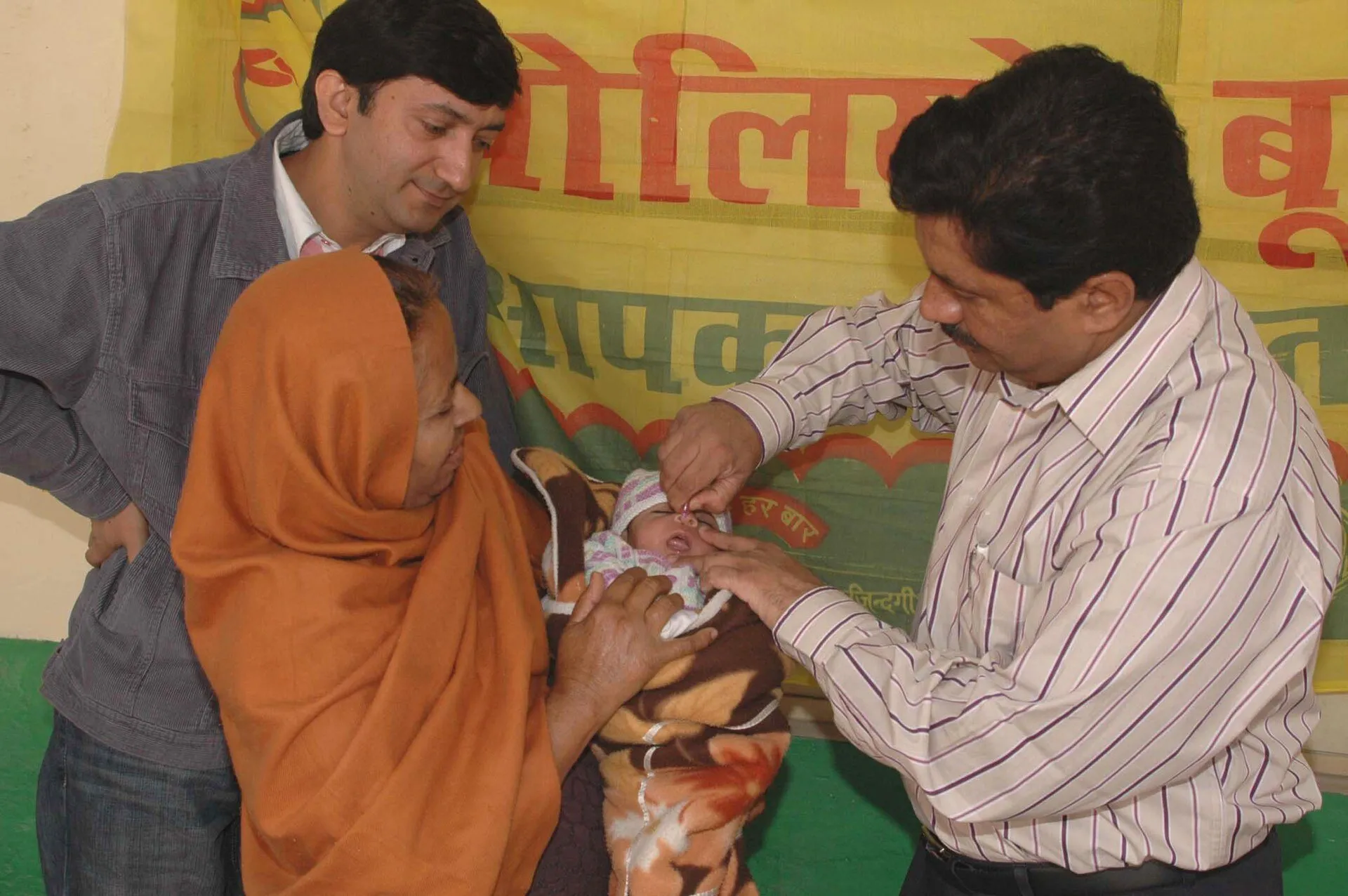
For generations, polio was one of the most feared childhood diseases in India. The virus could leave a healthy child paralysed for life within days. As late as 2009, India still had 741 cases, and until then it accounted for more than half of all polio cases in the world [1][2]. Many experts believed India would be the last place on Earth to be rid of the disease.
Five years later, it was gone.
The last case
The last child in India to be paralysed by wild poliovirus was Rukhsar, a girl from Howrah district in West Bengal, whose illness began on 13 January 2011 [2]. After that, no new case was found, and the virus also disappeared from the sewage samples that health teams kept testing [2].
A region can be declared polio-free only after at least three years with no cases at all. On 27 March 2014, the World Health Organization’s South-East Asia region, which includes India, was certified polio-free [1][3].
An army with drops
The victory was won by people, house by house. In every national round of the Pulse Polio campaign, about 2.4 million vaccinators, led by some 150,000 supervisors, visited more than 200 million households to give oral polio drops to nearly 172 million children under five [3].
Teams did not wait for families to come to them. They set up at railway stations, bus stands, markets and building sites to catch children on the move [3]. In the hardest places, volunteers sometimes worked by candlelight [3].
Winning trust
Medicine alone was not enough. In parts of Uttar Pradesh and Bihar, and along the Kosi river in eastern Bihar, some families feared the drops or refused them outright, sometimes angrily [3]. Rumours spread that the vaccine was a foreign plot [3].
The campaign answered with patience. Local religious leaders, including committees of ulema, were brought in to explain the vaccine to their communities, and their support proved critical in the most difficult areas [3]. Rotary volunteers, UNICEF and WHO staff, government health workers and countless local helpers all played their part [3].
India’s public-health officials gave the credit to the field workers, community health specialists and volunteers who did the hardest work [3].
Staying polio-free
The job did not end in 2014. Polio still exists in a few countries, so a single imported case could restart an outbreak. India keeps up mass immunisation campaigns and strong routine vaccination so that every child under five stays protected, runs some of the most sensitive disease surveillance in the world, and asks travellers from countries where polio persists to take the oral vaccine before arriving [1].
India also shares what it learned with countries still fighting the virus [1].
Why it matters
When India began its fight, many doubted that a country so vast, so crowded and so poor in places could ever wipe out polio. The success proved them wrong, and it showed what patient, door-to-door public health work can achieve. Today a whole generation of Indian children has grown up without ever seeing a classmate crippled by polio.
Sources
- [1] Keeping the polio virus at bay — World Health Organization, South-East Asia. Accessed 2 November 2026.
- [2] India declared polio free; no new case in 3 years — Down To Earth. Accessed 2 November 2026.
- [3] How India won over polio drop by drop — Al Jazeera. Accessed 2 November 2026.
Last updated . Report a correction