From the Rishis to the United Nations: How Yoga Became India's Gift to the World
In December 2014, the UN declared 21 June the International Day of Yoga. Today, millions around the world roll out their mats on that day.
By IndianGaurav team ·
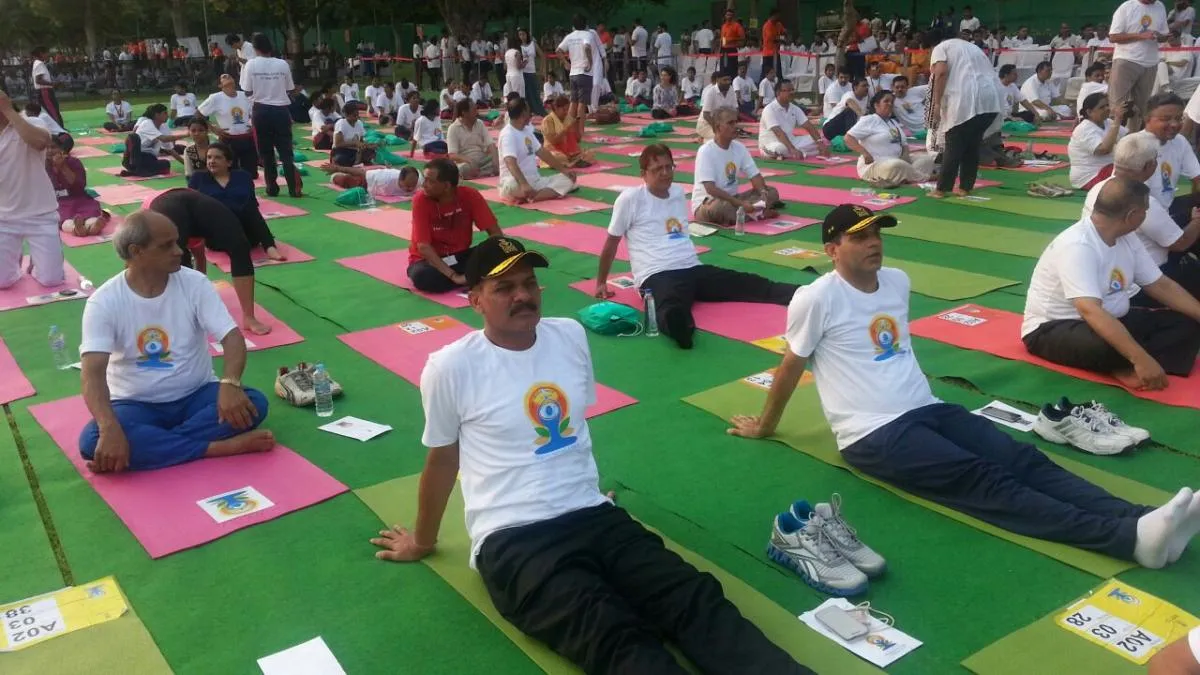
Every year on 21 June, people around the world roll out mats in parks, on beaches, in army camps and on the decks of ships, and practise yoga together.
This is the International Day of Yoga, proclaimed by the United Nations in December 2014 [1]. In just over a decade it has become one of the most widely marked international days, and a celebration of a practice that began in India.
What is yoga?
Yoga is an ancient practice from India that brings together body and mind [1]. It includes physical postures (asanas), breathing techniques (pranayama) and meditation, and its aim is overall well-being.
In 2016, UNESCO added yoga to its Representative List of the Intangible Cultural Heritage of Humanity, recognising a tradition handed down over generations from teacher to student [3][4].
A day for the world
On 27 September 2014, in his address to the UN General Assembly, Prime Minister Narendra Modi proposed that the world mark an International Day of Yoga [2].
On 11 December 2014, the General Assembly adopted resolution 69/131, proclaiming 21 June as the International Day of Yoga [1]. The UN says the draft was endorsed by a record 175 Member States [2].
The date was chosen because 21 June is the summer solstice, the longest day of the year in the Northern Hemisphere [2].
The first celebration
The first International Day of Yoga was held on 21 June 2015 on Rajpath in New Delhi, organised by the Ministry of AYUSH and led by the Prime Minister [4][5]. It set two Guinness World Records: the largest yoga lesson, with 35,985 participants, and the most nationalities (84) in a single yoga lesson [5].
Since then, the day has been marked every year in India and around the world, organised by Indian missions abroad, yoga schools and community groups, with a new theme each year.
Yoga for everyone
One of yoga’s strengths is that it is open to all. Children and older people can practise it; it needs little more than a mat and some space; and simple routines can be done at home or in a park. The UN describes it as a holistic approach to health and well-being [1], and it is practised by people of many faiths and of none.
Why it matters
Yoga is one of India’s best-known gifts to the world. On 21 June, from a village courtyard in India to a city park on the other side of the planet, people breathe, stretch and pause together. In a divided world, that simple shared practice is something to be proud of.
Sources
- [1] International Day of Yoga — United Nations. Accessed 11 October 2026.
- [2] Learn more about the International Day of Yoga — United Nations. Accessed 11 October 2026.
- [3] Yoga — Representative List of the Intangible Cultural Heritage of Humanity — UNESCO. Accessed 11 October 2026.
- [4] Yoga: India's Gift to the World — Press Information Bureau, Government of India. Accessed 11 October 2026.
- [5] International Day of Yoga 2024 — Press Information Bureau, Government of India. Accessed 11 October 2026.
Last updated . Report a correction