A Chariot of Stone for the Sun God: The Genius of Konark
Built in the 13th century, the Konark Sun Temple in Odisha is shaped like the giant chariot of the Sun God, with 24 carved wheels that work as sundials.
By IndianGaurav team ·
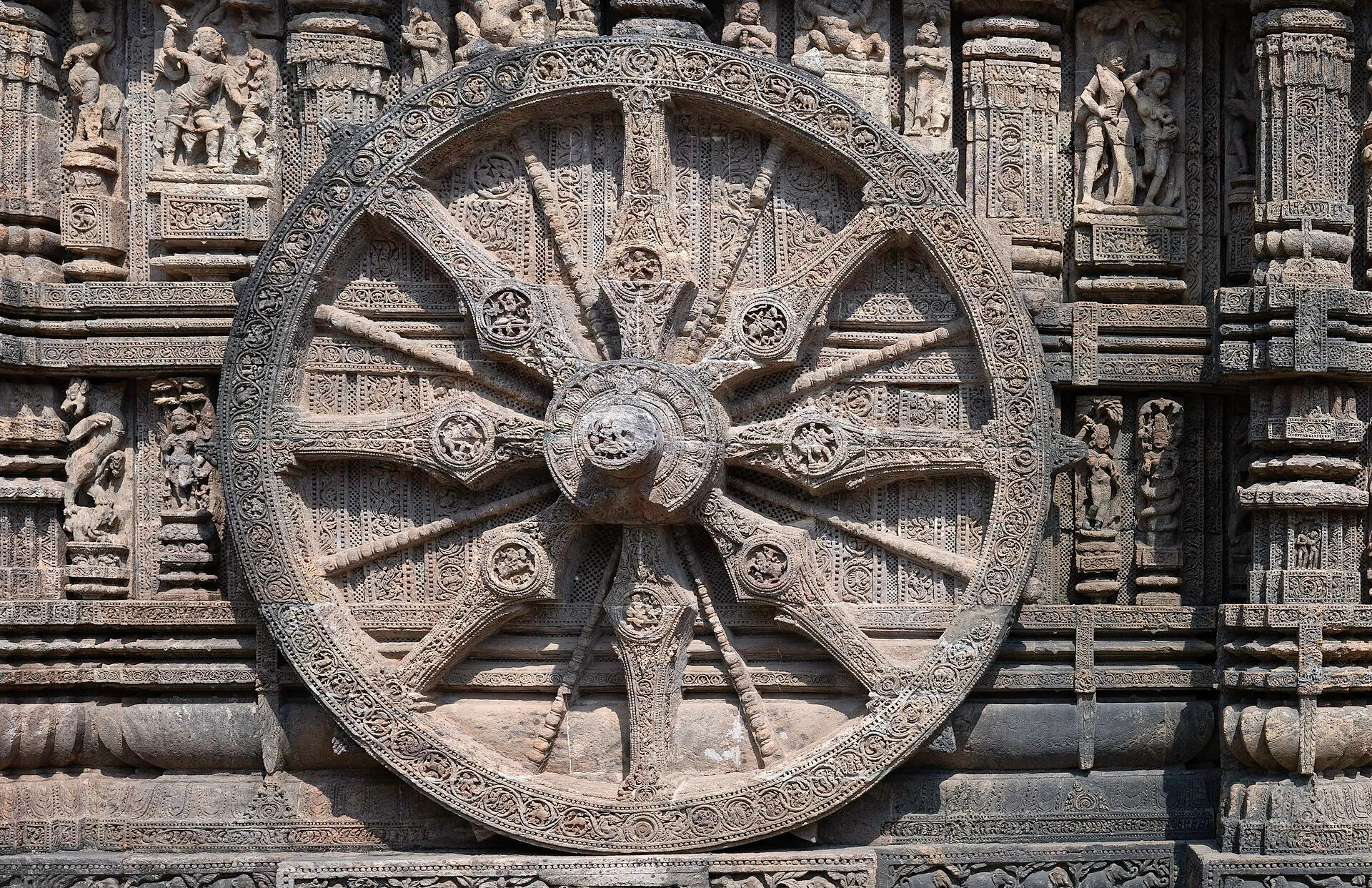
Imagine a giant chariot carved from stone, drawn by seven rearing horses and rolling on twenty-four great wheels. Now imagine it belongs to the Sun God himself.
That is the Konark Sun Temple, on the coast of Odisha, about 35 km from Puri [5]. Built in the 13th century, it is one of the greatest achievements of Indian temple architecture, and UNESCO added it to the World Heritage List in 1984 [1].
Built by a warrior king
The temple was built around 1250 CE by Narasimha I of the Eastern Ganga dynasty, who ruled from 1238 to 1264 [3][4]. In 1243 he had invaded southern Bengal and captured its capital, and Britannica records that he built the temple to commemorate that victory [4].
It was dedicated to Surya, the Sun God, worshipped as the giver of light and life.
The chariot of the Sun
The whole temple was designed as Surya’s chariot. Around its high platform run twelve pairs of richly carved wheels, and seven horses pull it forward [2].
The wheels have become one of India’s best-known symbols. The state tourism department describes them as doubling as ancient sundials [5], and since 2018 the Sun Temple has appeared on the back of India’s ₹10 note [6].
Every surface tells a story
The walls are covered in carvings: gods and goddesses, musicians and dancers, animals and mythical creatures, and scenes of royal life, hunting, war and everyday life. Elephants march around the base, musicians play on the upper levels, and dancers strike poses that can still be recognised in Odissi, the classical dance of Odisha.
The Black Pagoda
The temple once had a tall tower over its sanctum. European sailors used it as a landmark and called it the Black Pagoda, a name linked to the many shipwrecks off this coast [3].
That tower had collapsed by the 19th century [3]. What survives is mainly the jagamohana, the great entrance hall, about 30 metres square and 30 metres high [2], along with the platform, wheels and horses.
Saving the temple
In the early 20th century, to stop the jagamohana from collapsing too, the whole hall was filled with stone and sand and sealed [3]. In 2022, a project began to remove that sand and restore the hall [3]. Protecting a 750-year-old stone building beside the salty sea is a constant job.
Visiting Konark
Konark is an easy trip from Bhubaneswar and Puri. Chandrabhaga Beach, about 3 km away, is a peaceful place to watch the sunrise [5], and the temple hosts the Konark Dance Festival, with classical dancers performing against the floodlit temple [5].
Early morning, when the sun lights up the eastern face of the temple, is the best time to see why its builders chose this spot to honour the Sun.
Why it matters
The Konark Sun Temple brings together engineering, art and devotion in a single breathtaking structure. Even partly ruined, it amazes everyone who stands beside one of its giant wheels.
Sources
- [1] Sun Temple, Konârak — UNESCO World Heritage Centre. Accessed 11 October 2026.
- [2] Sun Temple, Konarak (1984), Odisha — Archaeological Survey of India. Accessed 11 October 2026.
- [3] Sun Temple of Konark — Encyclopaedia Britannica. Accessed 11 October 2026.
- [4] Narasimha I — Encyclopaedia Britannica. Accessed 11 October 2026.
- [5] Konark Sun Temple — Odisha Tourism, Government of Odisha. Accessed 11 October 2026.
- [6] ₹10 banknote — Mahatma Gandhi (New) Series — Reserve Bank of India. Accessed 11 October 2026.
Last updated . Report a correction