Back on the Map: NVS-03 Restores India's Own Navigation System
On 30 October 2026 ISRO launched the NVS-03 satellite on GSLV-F18, bringing India's NavIC navigation system back to working strength after a seven-month gap.
By IndianGaurav team ·
Every time a phone finds its place on a map, a ship plots its course or a power grid keeps its clocks in step, it relies on signals from satellites. Most of the world uses America’s GPS, Russia’s GLONASS or Europe’s Galileo. India built its own: NavIC, short for Navigation with Indian Constellation [2][3].
On the night of 30 October 2026, ISRO launched a satellite to bring that system back to full strength.
The launch
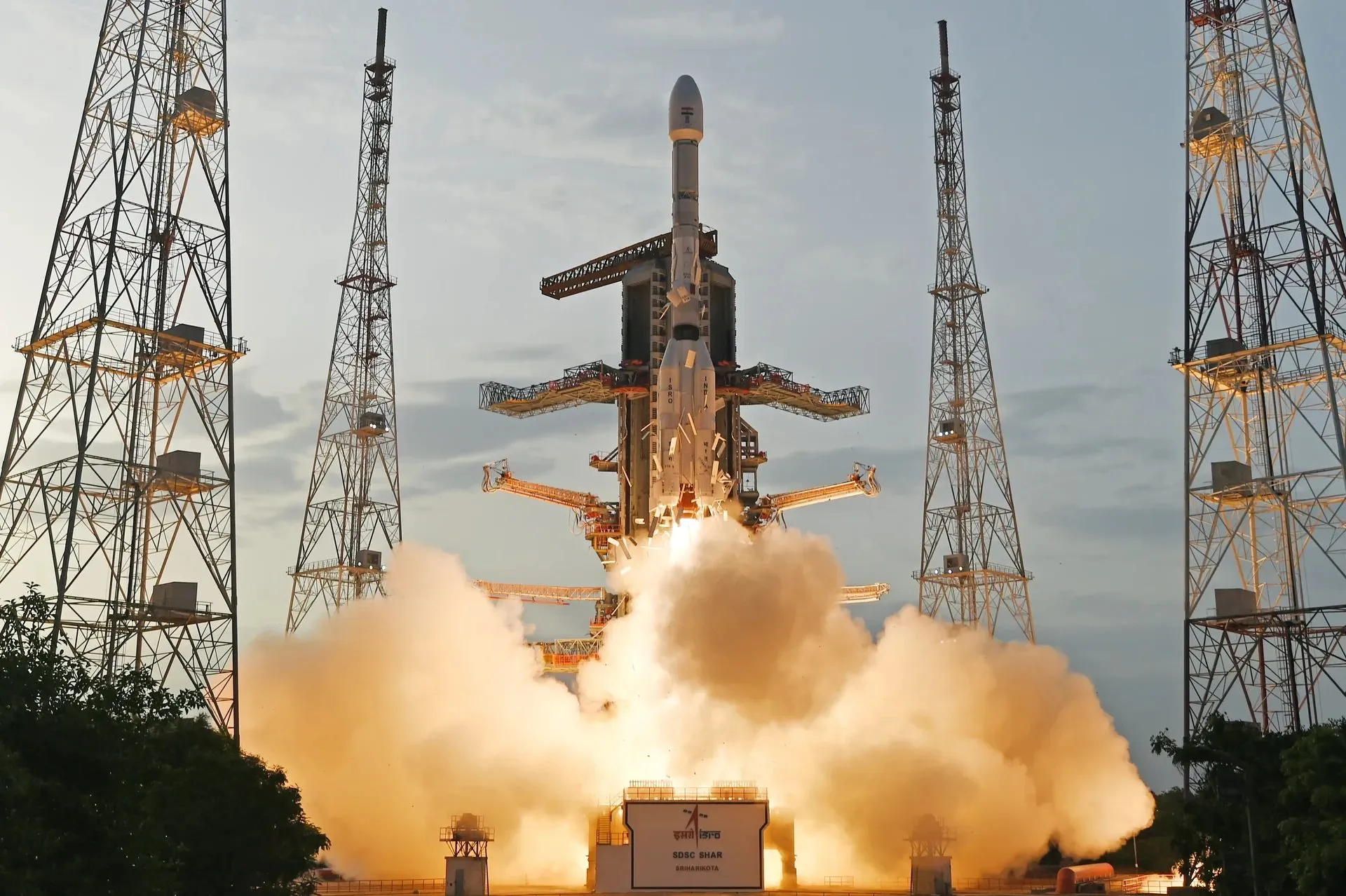
The GSLV-F18 rocket lifted off at 11:51 pm from the second launch pad at the Satish Dhawan Space Centre, Sriharikota, on the 20th flight of the GSLV [1][4]. It placed the NVS-03 satellite into its planned transfer orbit, from which the satellite climbs to its final position [1].
NVS-03 is the third of India’s second-generation navigation satellites [1][4]. It carries an atomic clock made in India alongside imported ones, and adds a new signal, called L1, to the existing ones [1]. The L1 signal should make it easier to build NavIC into everyday devices such as smartphones [2].
Filling a gap
NavIC needs at least four working satellites to give positions on its own. In March 2026 an atomic clock failed on one of the older satellites, leaving only three, and the service went down [2]. An earlier replacement, NVS-02, launched in January 2025, did not reach its intended orbit [3].
With NVS-03 in orbit, ISRO’s chairman confirmed that NavIC’s positioning, navigation and timing services had been restored, after about seven months [2].
Why India has its own system
NavIC covers India and a band about 1,500 km beyond its borders [1][4]. It offers an open service for everyone and an encrypted one for authorised users such as the armed forces [3][4]. Its uses range from vehicle tracking and fishing-boat messaging to disaster management and spreading Indian Standard Time [3].
Part of the reason for building it was that access to foreign navigation systems cannot be guaranteed in a crisis, a lesson India learned during the Kargil conflict of 1999 [2]. With NVS-03, India’s own signal in the sky is working again.
Sources
- [1] GSLV-F18/NVS-03 Mission — Indian Space Research Organisation. Accessed 17 November 2026.
- [2] ISRO's successful launch of NVS-03 paves way for revival of India's indigenous navigation system — Swarajya. Accessed 17 November 2026.
- [3] ISRO plans NavIC revival with NVS-03 launch in October — DT Next. Accessed 17 November 2026.
- [4] ISRO to launch GSLV-F18 carrying navigation satellite NVS-03 today — Siasat. Accessed 17 November 2026.
Last updated . Report a correction