From Milk Shortage to World Number One: The Farmers Who Built India's White Revolution
India produces nearly a quarter of the world's milk. The story starts with a few farmers in Gujarat and an engineer named Verghese Kurien.
By IndianGaurav team ·
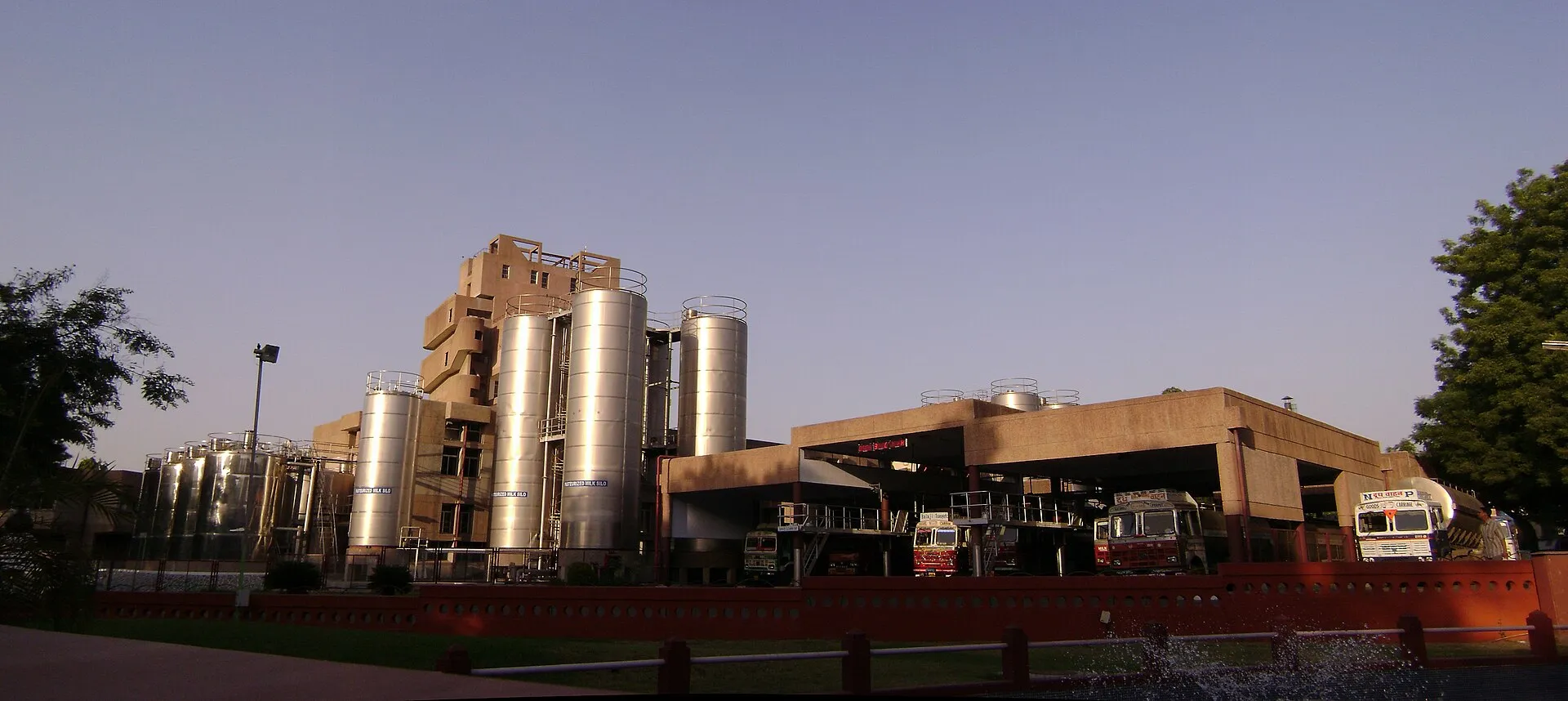
In the years after Independence, milk was scarce in India. Cities depended on imported milk powder. Many families could not afford enough milk for their children. Dairy farmers, most of them small and poor, were at the mercy of middlemen who paid them very little.
Today, India is the largest producer of milk in the world. In 2023-24, the country produced about 239.3 million tonnes of milk [1], nearly a quarter of the world’s supply [2]. That puts India comfortably ahead of the next biggest producers, including the United States and Pakistan [2].
How did this happen? The answer lies in a movement of ordinary farmers, a visionary engineer, and an idea that put power in the hands of the people who milk the cows.
The farmers of Kaira
The story begins in the 1940s in the Kaira (now Kheda) district of Gujarat. Dairy farmers there sold their milk to a private company that supplied the city of Bombay. The company paid low prices, and farmers had no real choice.
Encouraged by Sardar Vallabhbhai Patel, local leader Tribhuvandas Patel organised the farmers into a cooperative. In 1946, the Kaira District Cooperative Milk Producers’ Union was formed in the town of Anand [4]. The farmers would own the business, collect and sell their own milk, and share the profits.
The cooperative later became famous by a brand name that every Indian knows: Amul.
The engineer who wanted to leave
In 1949, a young engineer named Verghese Kurien was posted to a government creamery in Anand. Born in 1921 in Kozhikode, Kerala, Kurien had studied engineering in India and the United States, and had little interest in dairy [4]. He had been sent to Anand to fulfil the terms of a government scholarship and planned to leave as soon as he could.
But he was drawn into helping the struggling cooperative, at first fixing its equipment. Impressed by Tribhuvandas Patel and the farmers’ determination, he decided to stay. He ended up spending the rest of his working life in Anand [4].
Under Kurien’s leadership, the cooperative grew rapidly. One of its biggest breakthroughs came in the 1950s, when Kurien’s colleague H.M. Dalaya helped develop a way to make milk powder from buffalo milk, which India had in abundance [4]. It was a major step towards self-reliance.
The Anand pattern
The cooperative’s model came to be called the Anand pattern. Its key ideas were simple [3]:
- Village cooperatives collect milk from every farmer, big or small, twice a day.
- Milk is tested and farmers are paid fairly based on quality and fat content, often on the same day.
- District unions process the milk and make products such as butter, cheese and milk powder.
- State federations market the products under shared brands.
- Most importantly, the farmers own and control the whole system.
The model worked so well that in 1964, Prime Minister Lal Bahadur Shastri visited Anand, spent a night in a village, and asked Kurien to spread the model across India. The National Dairy Development Board (NDDB) was set up in 1965, with Kurien as its chairman [3][4].
Operation Flood
In 1970, the NDDB launched Operation Flood, one of the largest dairy development programmes in the world [3].
The plan was bold. Food aid in the form of milk powder and butter oil, donated through the World Food Programme and later supported by the European Economic Community and the World Bank, was sold within India. The money raised was used to build cooperatives, dairies, chilling centres and transport across the country [3].
Operation Flood ran in three phases until 1996. Over that time, it created a national milk grid linking producers in rural areas to consumers in hundreds of cities. Milk travelled across the country in insulated road and rail tankers. The number of farmers in dairy cooperatives grew into the millions [3].
The movement became known as India’s White Revolution. By 1998, India had overtaken the United States to become the world’s largest milk producer [4].
Women at the centre
Women have always done much of the daily work of dairy farming, from feeding the animals to carrying milk to the collection centre. During Operation Flood’s third phase, the number of women members, and of dairy cooperatives run by women, grew significantly [3].
Dairy today supports more than 8 crore farming families directly and contributes significantly to the rural economy [2]. For many small farmers, a cow or buffalo is like a savings account and a steady monthly income.
Growth that keeps going
The White Revolution did not stop when Operation Flood ended. India’s milk output has kept climbing. Government figures show production rising from about 146 million tonnes in 2014-15 to about 239 million tonnes in 2023-24 [2]. Over the same period, the average amount of milk available per person rose to more than 470 grams a day, well above the world average [2].
Production is spread across the country. Uttar Pradesh is the largest producing state, followed by Rajasthan, Madhya Pradesh, Gujarat and Maharashtra [1]. India also exports dairy products to countries such as the UAE, Saudi Arabia and the United States [1].
Kurien’s legacy
Verghese Kurien received many honours, including the Ramon Magsaysay Award, the World Food Prize and the Padma Vibhushan [4]. But he often said he was proud of being an employee of the farmers.
His story was told in the 1976 film Manthan (The Churning), directed by Shyam Benegal. The film was funded in a remarkable way: around five lakh dairy farmers in Gujarat each contributed ₹2, making them the producers of the film about their own lives [4].
Kurien died in 2012. His birthday, 26 November, is now celebrated as National Milk Day in India [4].
Why it makes India proud
The White Revolution is a story of a nation feeding itself through the effort of its own people. It did not depend on huge factory farms, but on crores of small farmers working together. It showed that rural Indians, given fair prices and ownership, could build world-class institutions.
The next time you pour a glass of milk or open a pack of butter, it is worth remembering the farmers of Kaira, a reluctant engineer from Kerala, and the movement that turned India from a land of milk shortages into the world’s largest dairy nation.
Sources
- [1] Dairy Products — India production overview — APEDA, Ministry of Commerce & Industry, Government of India. Accessed 11 October 2026.
- [2] India continues to hold top position in global milk production — IANS. Accessed 11 October 2026.
- [3] Operation Flood — National Dairy Development Board (NDDB). Accessed 11 October 2026.
- [4] Verghese Kurien — Wikipedia. Accessed 11 October 2026.
Last updated . Report a correction