Three Out of Four Wild Tigers Live in India: The Story of Project Tiger
Launched in 1973, Project Tiger helped India's tiger numbers recover. Today India is home to about 75% of the world's wild tigers.
By IndianGaurav team ·
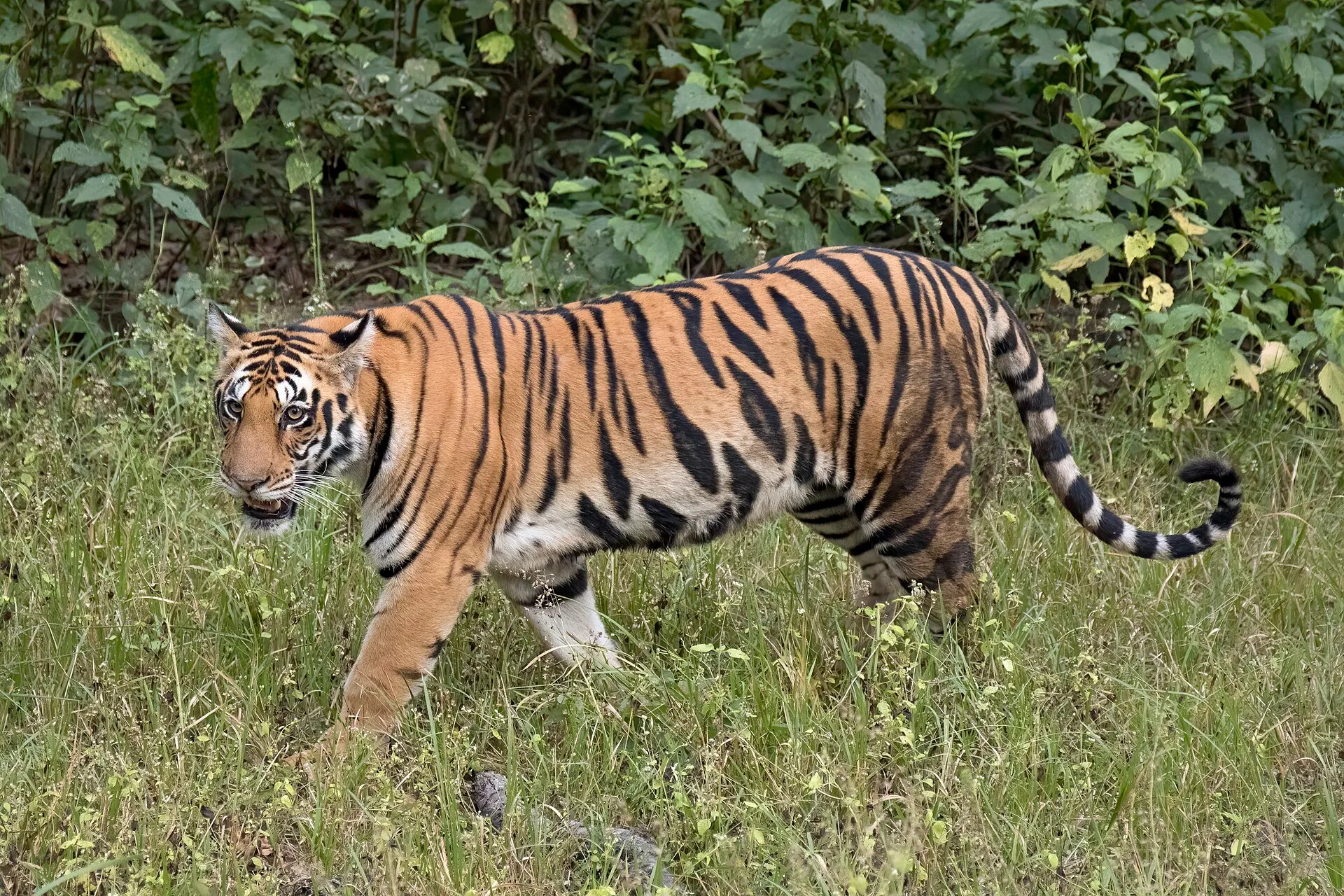
By the early 1970s, hunting, poaching and the loss of forests had pushed India’s tigers towards the edge. The national animal was in real danger of disappearing.
Today the picture is very different. The 2022 national estimate put India’s wild tigers at an average of 3,682, with an upper estimate of 3,925, growing at about 6.1 per cent a year [1]. That is close to 75 per cent of all the wild tigers in the world [1][2].
The turning point was Project Tiger.
The launch
On 1 April 1973, India launched Project Tiger at Corbett [3]. It began with nine tiger reserves covering about 18,278 square kilometres [3].
The idea was to create protected areas where tigers, and the whole ecosystem they depend on, could recover. Each reserve has a core area, kept as free of human disturbance as possible, and a buffer zone around it, where people live and work under rules that protect wildlife.
Protecting the tiger protects everything
The tiger sits at the top of the food chain. It needs large areas of forest or grassland, plenty of prey such as deer and wild boar, and water. So saving tigers means saving whole landscapes and the thousands of other species that live in them. That is why the tiger is called an umbrella species.
Ups and downs
The road was not smooth. Poaching for the illegal trade in skins and body parts caused heavy losses, and by 2006 the national count had fallen to 1,411 tigers [2][3].
The government responded. Following a Tiger Task Force report in 2005, the law was amended in 2006 to create the National Tiger Conservation Authority (NTCA) and the Wildlife Crime Control Bureau [3]. Tigers that had vanished from Sariska and Panna were successfully brought back by moving animals from other reserves [3].
Counting tigers scientifically
India counts its tigers every four years. Surveys use camera traps that photograph animals automatically; since every tiger’s stripes are unique, individual animals can be identified [5].
Where the tigers live
The 2022 estimate found the most tigers in [1]:
- Madhya Pradesh (785)
- Karnataka (563)
- Uttarakhand (560)
- Maharashtra (444)
From the original nine, India’s network has grown to 58 tiger reserves in 18 states, covering about 84,500 square kilometres [4].
Living alongside tigers
India’s success is all the more remarkable because it has happened in one of the most crowded countries on Earth, where many reserves are ringed by villages and farms. Conservation authorities work with communities to reduce conflict, through compensation for losses, early warning and support for voluntary relocation from core areas, while eco-tourism brings jobs to nearby villages.
Fifty years and beyond
India marked 50 years of Project Tiger in 2023, and that year launched the International Big Cat Alliance to help protect big cats around the world [2].
Why it matters
From the brink of disappearance to three-quarters of the world’s wild tigers: Project Tiger is one of the great conservation stories anywhere. It shows that a crowded, fast-growing country can still make room for its wildlife.
Sources
- [1] India's tiger population estimates to 3925 with an annual growth rate of 6.1% per annum — News On AIR (All India Radio). Accessed 11 October 2026.
- [2] India celebrates 52 years of Project Tiger: a global conservation success story — News On AIR (All India Radio). Accessed 11 October 2026.
- [3] A Global Commitment to Tiger Conservation — Press Information Bureau, Government of India. Accessed 11 October 2026.
- [4] Securing Tigers for Posterity — National Tiger Conservation Authority. Accessed 11 October 2026.
- [5] India Tiger Estimation (2022) — summary report — National Tiger Conservation Authority. Accessed 11 October 2026.
Last updated . Report a correction