Bricks That Float on Water: The Temple Named After Its Sculptor
Built in 1213 CE, Telangana's Ramappa Temple is famous for its floating bricks, earthquake-resistant base and stunning sculptures. It became a World Heritage Site in 2021.
By IndianGaurav team ·
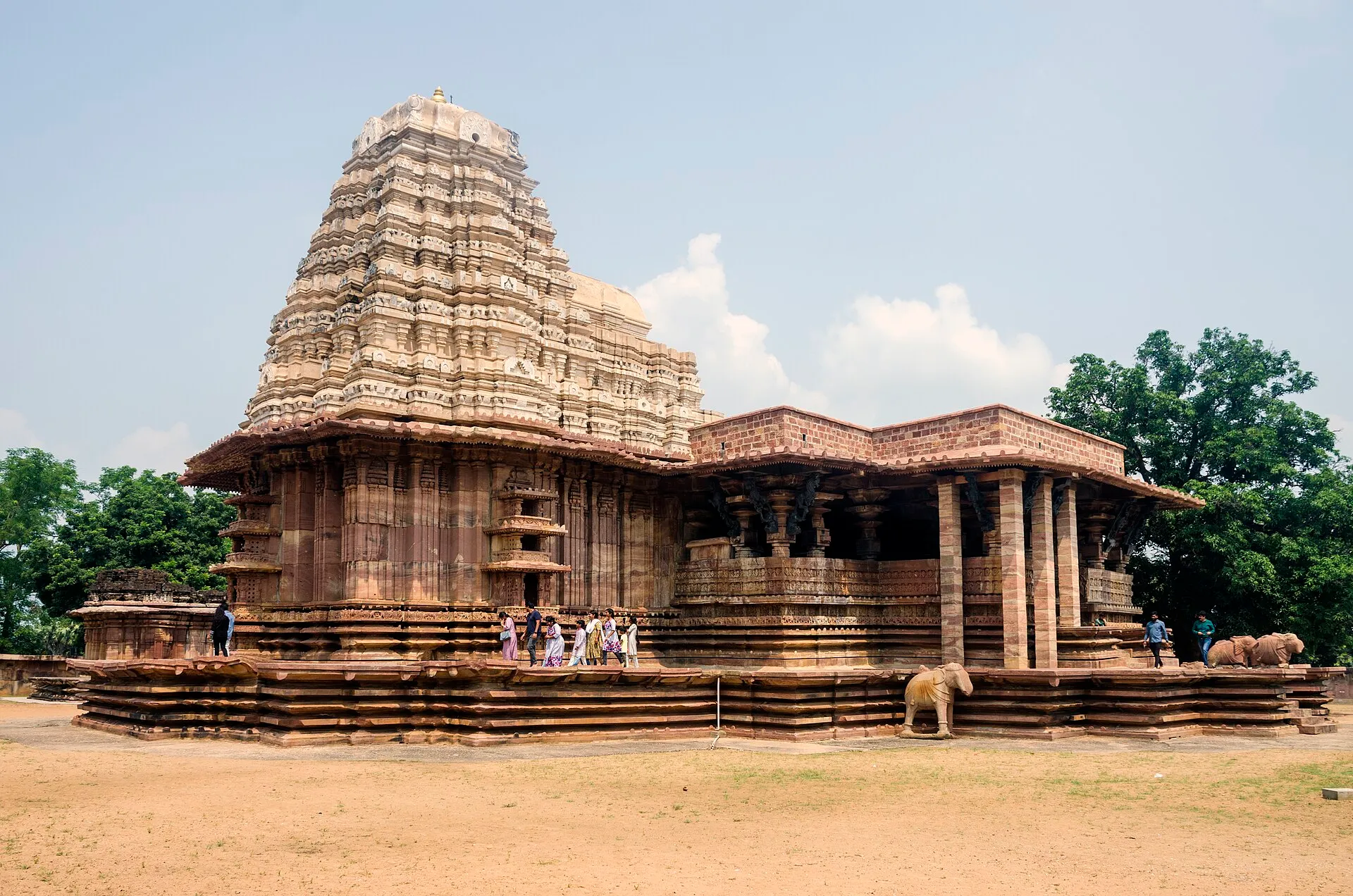
Most great temples in India are named after the god they honour or the king who built them. The Ramappa Temple in Telangana is different: it carries the name of its chief sculptor, Ramappa [3][4]. Telangana Tourism says it is probably the only temple in the country known by its sculptor’s name [4].
Eight centuries on, its art and engineering still amaze visitors. In July 2021, UNESCO added the Kakatiya Rudreshwara (Ramappa) Temple to its World Heritage List [1]. It became India’s 39th World Heritage Site [2].
Who built the temple?
The temple was built in the time of the Kakatiya dynasty, which ruled much of today’s Telangana and Andhra Pradesh. Its construction was begun in 1213 CE by Recharla Rudra, a general of the Kakatiya king Ganapati Deva [2][3]. The date is recorded in a 204-line inscription on a polished basalt pillar [3].
The temple is dedicated to Shiva, worshipped here as Rudreshwara. It stands at Palampet, near the large Ramappa Lake, in a landscape the Kakatiyas planned around water, temple and farmland [1].
The government’s announcement adds that Ramappa worked on the temple’s sculpture for 40 years [2].
Floating bricks
The temple’s pyramid-shaped tower is built of lightweight, porous bricks, often called “floating bricks” [1]. Lighter bricks put less weight on the walls and pillars below. When some went missing, conservators studied the originals and made new ones using the same 13th-century techniques [3].
A foundation built on sand
The temple stands on a sand-box foundation: a pit filled with sand beneath the stone base. UNESCO’s nomination describes it as an ingenious design for earthquake resistance [3]. Over the centuries the sand has slowly leaked from the box, one of the conservation challenges the temple faces [3].
Sculptures that seem alive
The temple’s beams and pillars are carved from granite and dolerite, and its sculpture is of the highest quality [1]. The best known are the madanikas, graceful bracket figures of dancers and musicians at the tops of the outer pillars. Together with the mythical gaja-vyalas, there are about 40 bracket figures, and around 600 small relief panels, most still intact [3].
Visiting the Ramappa Temple
The temple is a peaceful place among fields and trees, and can be visited as a day trip from Warangal, the old Kakatiya capital. The cooler months from October to March are the most pleasant. Take time over the pillars and bracket figures; they reward a close look.
Why it matters
The Ramappa Temple shows the brilliance of medieval Indian builders: floating bricks, an earthquake-resistant foundation and polished stone carving, combining science and art.
And its name carries a message. By remembering the temple by its sculptor, people honoured the artist as well as the patron. Eight hundred years later, every visitor who says Ramappa continues that tribute.
Sources
- [1] Kakatiya Rudreshwara (Ramappa) Temple, Telangana — UNESCO World Heritage Centre. Accessed 11 October 2026.
- [2] India gets its 39th World Heritage Site — Press Information Bureau, Government of India. Accessed 11 October 2026.
- [3] Rudreshwara (Ramappa) Temple, Palampet: Executive Summary — UNESCO World Heritage Centre (nomination dossier). Accessed 11 October 2026.
- [4] Ramappa Temple — Telangana Tourism, Government of Telangana. Accessed 11 October 2026.
Last updated . Report a correction