Where the Wheel First Turned: Sarnath Joins the World Heritage List
On 25 July 2026 UNESCO inscribed the Ancient Buddhist Site of Sarnath, where the Buddha gave his first sermon, as India's 45th World Heritage Site.
By IndianGaurav team ·
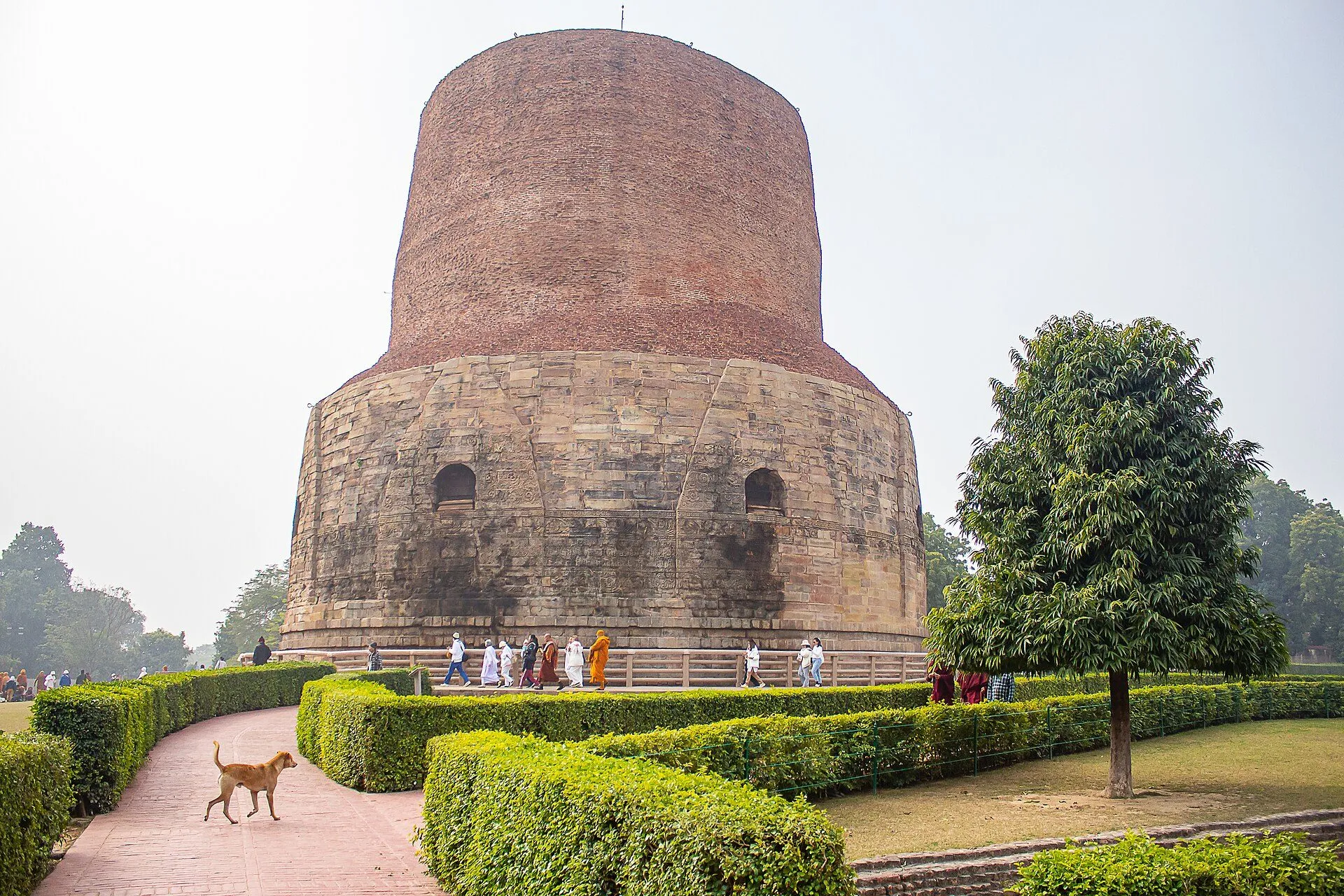
About 10 km from Varanasi lies a quiet park of brick ruins and lawns. Buddhist tradition holds that it was here, more than two and a half thousand years ago, that the Buddha gave his first sermon after his enlightenment, “setting the wheel of Dharma in motion” [1][2].
On 25 July 2026, at its 48th session in Busan, South Korea, UNESCO’s World Heritage Committee added the Ancient Buddhist Site of Sarnath to the World Heritage List [2][3]. It became India’s 45th World Heritage Site, and Uttar Pradesh’s fourth, after the Taj Mahal, Agra Fort and Fatehpur Sikri [2].
The Deer Park
Ancient texts call the place Isipatana, or the Deer Park [1]. The name Sarnath is thought to come from Saranganath, “lord of the deer”, linked to a story of the Buddha in an earlier life as a deer who gave his life to save a doe [3].
It was here that the Buddha taught his first five disciples, Kaundinya, Assaji, Bhaddiya, Vappa and Mahanama, and so founded the Sangha, the community of monks [3]. Sarnath is counted among the four holiest pilgrimage places of Buddhism [3].
What UNESCO recognised
The listing covers two parts about 626 metres apart: the Chaukhandi Stupa, which marks the Buddha’s meeting with his five companions, and the archaeological remains of Sarnath [2]. The second includes the great Dhamek Stupa, the Dharmarajika Stupa begun under Emperor Ashoka, the foundations of old monasteries and shrines, and the remains of Ashoka’s pillar [1][2].
That pillar was once crowned by the Lion Capital, which India adopted as its national emblem. It is now kept in the site museum, alongside fine sculptures from the Gupta period found during excavations [1].
Over the centuries, the Mauryas, Kushanas and Guptas built Sarnath into a busy centre of Buddhist learning [1]. Today ancient ruins sit beside working monasteries built by Buddhist communities from Thailand, Japan, Myanmar, Tibet and elsewhere, so the site is both an archaeological treasure and a living place of worship [1].
A long wait
Sarnath first went on India’s tentative list for World Heritage on 3 July 1998, so the inscription came after nearly 28 years [2]. The conservation architect Abha Narain Lambah, who worked on the nomination, has said the site matters for more than its monuments: it is where the first sermon was given, the Sangha began and the earliest Buddhist architecture took shape [2].
World Heritage status brings duties as well as pride. Fragile remains will need protecting from heavy visitor numbers, and building around the site will have to respect its calm, reflective character [1].
Sources
- [1] Sarnath Becomes India's 45th UNESCO World Heritage Site — Outlook Traveller. Accessed 17 November 2026.
- [2] Uttar Pradesh: Sarnath Added To UNESCO World Heritage List, Becomes State's Fourth Heritage Site — Free Press Journal. Accessed 17 November 2026.
- [3] UNESCO Adds Ancient Buddhist Site Of Sarnath To World Heritage List; Know About This Significant Place — Free Press Journal. Accessed 17 November 2026.
Last updated . Report a correction