Where Even Breathing Is a Battle: The Soldiers Who Guard Siachen
Since 1984, Indian soldiers have held the Siachen Glacier, the world's highest battlefield, in some of the harshest conditions on Earth.
By IndianGaurav team ·
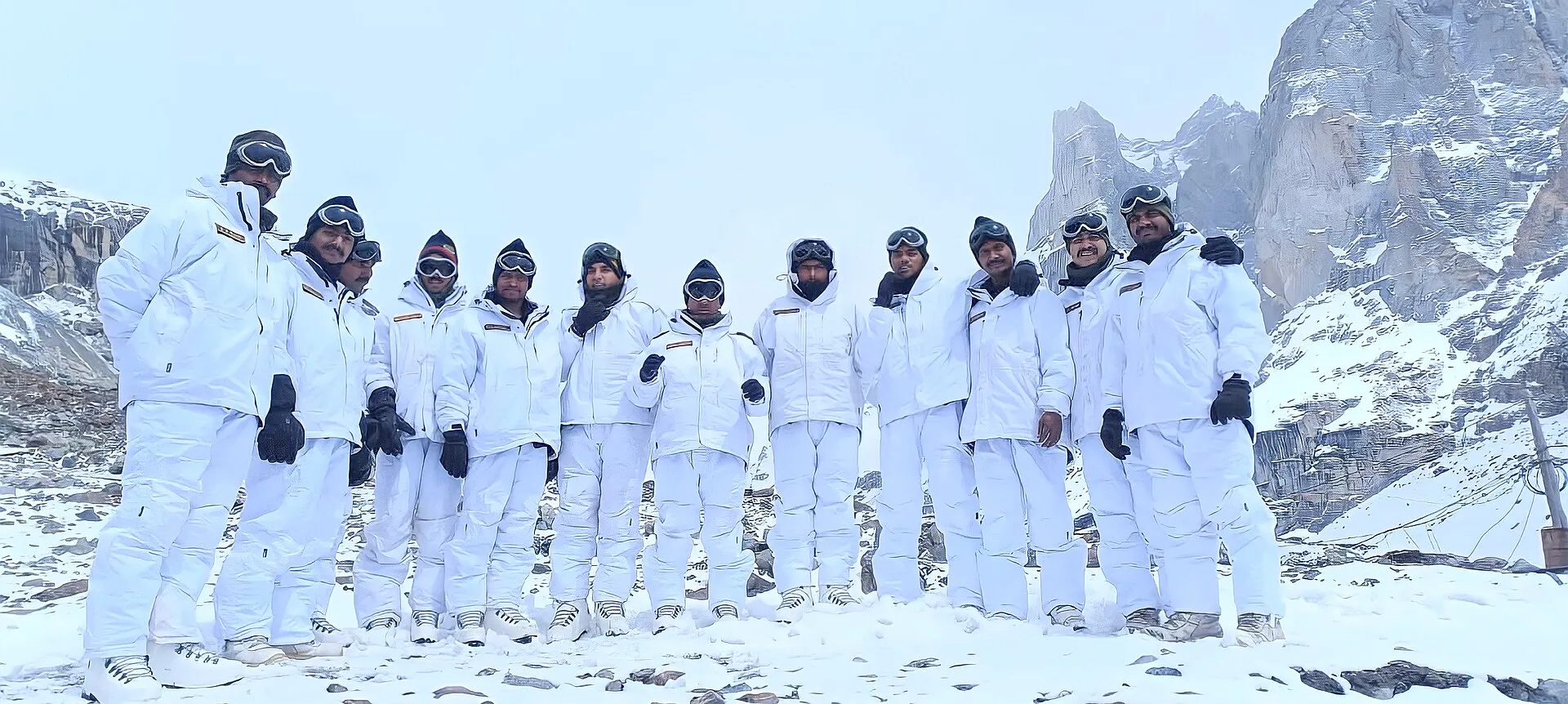
Imagine standing guard on a ridge of ice where the air holds a fraction of the oxygen you are used to, the cold can freeze exposed skin in minutes, and an avalanche can bury a post without warning.
This is everyday duty for Indian soldiers on the Siachen Glacier, often called the world’s highest battlefield [2][3]. Here, the mountain itself is as dangerous as any adversary.
A glacier in the Karakoram
The Siachen Glacier lies in the eastern Karakoram range in Ladakh. It is one of the world’s longest mountain glaciers, and its meltwater feeds the Nubra River [1].
How the dispute began
When India and Pakistan drew their ceasefire line in Jammu and Kashmir in 1949, it stopped at a map point called NJ 9842. The high, icy land to the north was considered inaccessible and was left unmapped. The line was adjusted after the wars of 1965 and 1971, but it still ended at NJ 9842, and both countries came to claim the whole Siachen region [1].
In the early 1980s, India received intelligence that Pakistan was preparing to move into the area [2]. On 13 April 1984, India launched Operation Meghdoot to secure the heights of the Saltoro Ridge, which overlooks the Nubra Valley [2]. Indian Air Force helicopters and transport aircraft lifted troops and supplies onto the glacier, and about 300 soldiers took up positions on its key peaks and passes [3]. Indian troops have held those heights ever since, and 13 April is now marked as Siachen Day [3].
Life at the top
Soldiers train hard before they go up, in ice-craft, climbing, cold-weather survival and crevasse rescue. Even so, the body struggles at these heights. Frostbite, altitude sickness, avalanches and hidden crevasses are constant threats. Many posts can be reached only by helicopter, and tours at the highest positions are kept short because no one can stay healthy there for long.
The human cost has been heavy. By 2012, the government told Parliament, 846 members of the armed forces had died on the Siachen glacier since 1984 [4].
The lifeline in the sky
Helicopter crews are the glacier’s lifeline. They fly food, fuel, ammunition and people to tiny helipads on the ridges, in air so thin that helicopters struggle to stay up, and bring the sick and injured down [3]. IAF Chetak helicopters had been landing on the glacier since October 1978, years before Operation Meghdoot [3].
Stories of courage
Naib Subedar Bana Singh. On 23 June 1987, Bana Singh of the Jammu and Kashmir Light Infantry led a small team up to a post at about 21,000 feet, approaching from a harder route through a blizzard, and captured it in close combat. He received the Param Vir Chakra, India’s highest wartime gallantry award [5].
Lance Naik Hanamanthappa Koppad. In February 2016, an avalanche buried ten soldiers of the Madras Regiment at a post on the glacier. Six days later, rescuers found Hanamanthappa still alive under the snow. The country prayed for him, but he died in an Army hospital in Delhi a few days later [6].
Captain Shiva Chauhan. In January 2023, Captain Shiva Chauhan of the Fire and Fury Sappers became the first woman officer to be operationally deployed at Kumar Post on the glacier, a moment the Prime Minister publicly applauded [7].
Remembering the fallen
At the base camp stands the Siachen War Memorial, which records the names of those who died on the glacier. In September 2024, President Droupadi Murmu laid a wreath there and met the troops [8].
Why it matters
The story of Siachen is, above all, about the people who serve there: young soldiers from villages and towns across India who leave their families for months to guard a frozen frontier at the edge of human endurance. Many come home with injuries; some never come home. Their courage deserves to be remembered.
Sources
- [1] Siachen Glacier — Encyclopaedia Britannica. Accessed 11 October 2026.
- [2] 'Operation Meghdoot' Commemorated — Press Information Bureau, Government of India. Accessed 11 October 2026.
- [3] IAF in Operation Meghdoot — Press Information Bureau, Government of India. Accessed 11 October 2026.
- [4] Withdrawal of Troops from Siachen — Press Information Bureau, Government of India. Accessed 11 October 2026.
- [5] Bana Singh — Param Vir Chakra — Gallantry Awards, Ministry of Defence. Accessed 11 October 2026.
- [6] Back from the dead: Lance Naik Hanamanthappa Koppad — Business Standard. Accessed 11 October 2026.
- [7] PM applauds as Capt Shiva Chauhan becomes the first woman officer to be operationally deployed in Kumar Post — Press Information Bureau, Government of India. Accessed 11 October 2026.
- [8] President of India visits Siachen Base Camp and interacts with the troops — Press Information Bureau, Government of India. Accessed 11 October 2026.
Last updated . Report a correction