A Handshake in Orbit: How ISRO Joined Two Satellites in Space
On 16 January 2025 ISRO's SpaDeX mission docked two satellites in orbit, making India only the fourth country, after the US, Russia and China, to master space docking.
By IndianGaurav team ·
Bringing two spacecraft together in orbit is one of the hardest things in spaceflight. Both are racing around the Earth at enormous speed. To join them, engineers must slow the gap between them to a crawl, line them up perfectly and lock them together without a bump.
Until 2025, only three countries had done it: the United States, Russia and China [2][3]. On 16 January 2025, India became the fourth [2][3].
Two small satellites
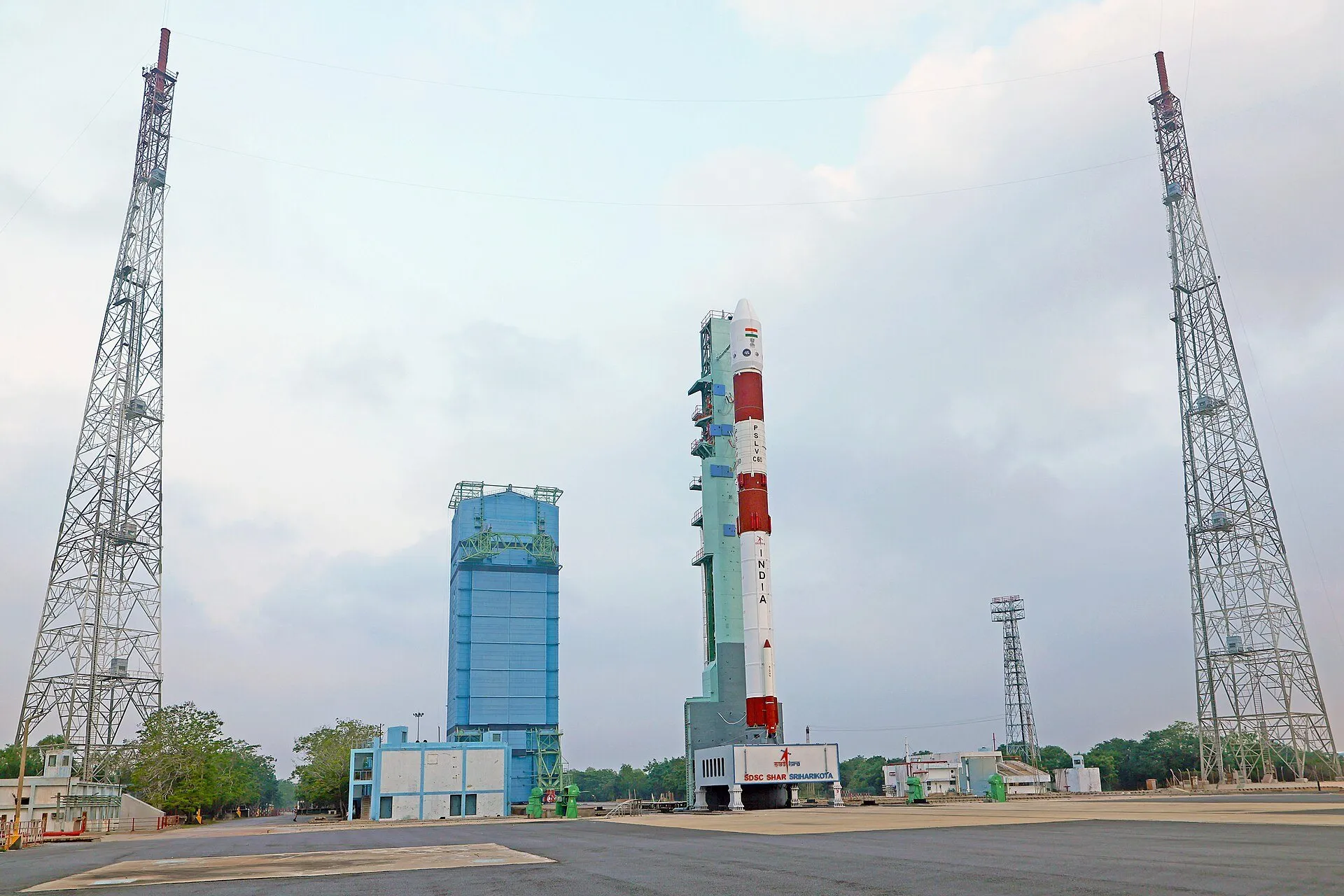
The mission was called SpaDeX, short for Space Docking Experiment. On 30 December 2024, a PSLV-C60 rocket lifted off from Sriharikota carrying two satellites of about 220 kg each [1][2]. One, SDX01, was the “Chaser”; the other, SDX02, was the “Target” [1]. They were placed in a circular orbit about 475 km above the Earth [2].
To dock, the satellites carried what ISRO calls the Bharatiya Docking System, developed in India. It combines a docking mechanism, four sensors for rendezvous and docking, technology to pass electric power between the two craft, a home-grown strategy for finding and approaching each other on their own, and a radio link between the satellites [1].
Patience before success
The first docking attempts, planned for 7 and 9 January, were called off because of technical problems [3]. On 12 January ISRO brought the two satellites to within three metres of each other as a trial, then backed them away to a safe distance [2].
Four days later, it worked. ISRO announced that the spacecraft had docked, and soon after that the two satellites were being controlled as a single object [2]. “India docked its name in space history,” the agency posted [2]. The Prime Minister called it a significant stepping stone for India’s future space missions [2][3].
Why docking matters
Docking may sound like a technical trick, but it opens the door to almost everything ISRO hopes to do next.
Chandrayaan-4, India’s planned mission to bring back samples from the Moon, will need several dockings and undockings, around the Earth and around the Moon [1][3]. India’s planned space station, the Bharatiya Antariksh Station, will have to be assembled in orbit from separate modules, and crews will need to dock with it [1]. Docking is also needed to refuel or service satellites in space and to move crew and cargo between spacecraft [1].
SpaDeX also had a second job. The PSLV’s spent fourth stage, turned into a small orbiting platform called POEM-4, carried 24 extra experiments from Indian universities and start-ups [1].
A small mission with a big future
SpaDeX used two small, low-cost satellites, yet it gave India a skill shared by only a handful of nations. The next time two Indian spacecraft meet in orbit, perhaps carrying Moon rock or astronauts, they will rely on what was first proved in January 2025.
Sources
- [1] ISRO launches SpaDEX mission, becomes 4th nation to ace docking technology — IANS. Accessed 2 November 2026.
- [2] ISRO successfully docks satellites as part of SpaDeX mission — The Tribune. Accessed 2 November 2026.
- [3] India becomes fourth country to achieve space docking — Scroll.in. Accessed 2 November 2026.
Last updated . Report a correction