From Street Vendors to Global Fame: How UPI Changed the Way India Pays
India's UPI now handles over 24 billion transactions a month. Here is how a homegrown idea turned a cash-heavy country into a digital payments leader.
By IndianGaurav team ·
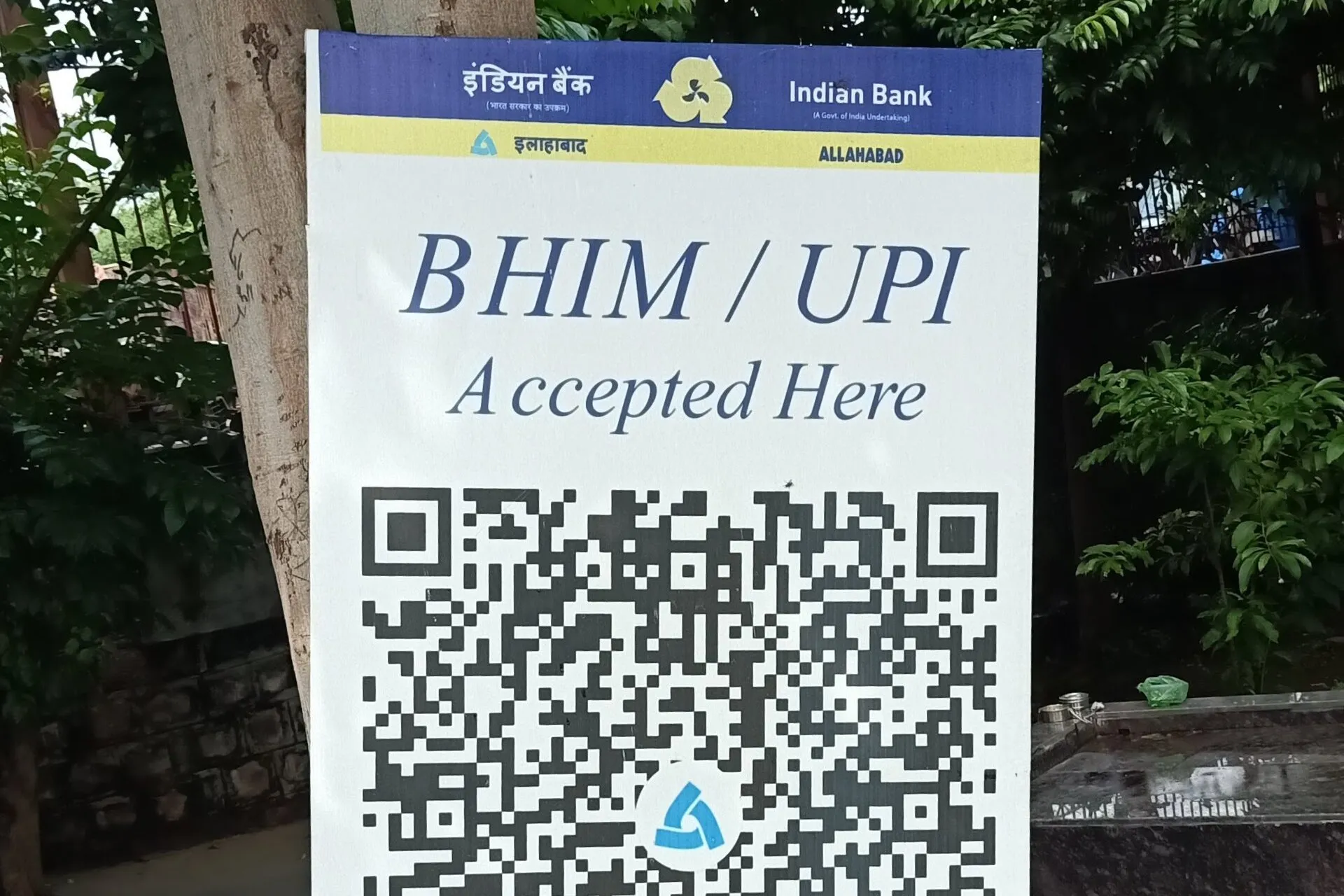
Walk through any Indian market today and you will see the same small square printed on cardboard, stuck to a cart, or hanging by a string from a stall: a QR code. The vegetable seller has one. So does the chaiwala, the auto-rickshaw driver, the temple donation box and the neighbourhood barber.
Customers pull out their phones, scan, type an amount, enter a PIN, and hear a cheerful voice from a small speaker announce that the money has arrived. The whole thing takes a few seconds.
This is the Unified Payments Interface, or UPI. In less than ten years, it has become the largest real-time payments system in the world by number of transactions. In August 2026 alone, Indians made 24.51 billion UPI transactions worth about ₹29.82 lakh crore [1]. That is roughly 790 million payments every single day.
The problem UPI solved
Not long ago, India ran mostly on cash. Sending money to someone meant visiting a bank branch, filling in forms, or knowing the other person’s account number and bank branch code. Online transfers existed, but they were clunky and often took hours. Cards were common in cities but rare in villages, and many small shops could not afford card machines.
The National Payments Corporation of India (NPCI), a not-for-profit organisation set up by the Reserve Bank of India and Indian banks, wanted to change this. Its idea was simple to describe but hard to build: a single system that would let anyone with a bank account and a phone send money to anyone else, instantly, at any time of day, using something as easy as a phone number or a short ID [3].
How UPI works
UPI was officially launched in April 2016, with apps rolling out to the public later that year [3].
Its design has a few clever features:
- Virtual addresses. Instead of sharing a bank account number, you get a UPI ID that looks like an email address, such as name@bank. You can also pay to a phone number or by scanning a QR code.
- Works across banks and apps. A customer of one bank can use any UPI app to pay a customer of any other bank. No one is locked into a single company.
- Instant and always on. Money moves in seconds, 24 hours a day, 365 days a year, including weekends and holidays.
- Simple security. Each payment is approved with a short PIN on the user’s own phone.
- Free for ordinary users. Most person-to-person and small merchant payments carry no charge for the customer.
Because UPI is an open, shared system rather than a single company’s product, banks, start-ups and big technology firms could all build apps on top of it. This competition drove rapid innovation and fast adoption [3].
The great leap
UPI grew slowly at first. Then several things came together [3].
Cheap smartphones and some of the world’s lowest mobile data prices put the internet in the hands of hundreds of millions of Indians. Government programmes had opened bank accounts for crores of people who had never had one. And the Aadhaar digital identity system made it easier to verify customers.
The COVID-19 pandemic gave UPI another push, as people looked for ways to avoid handling cash [3].
The numbers grew year after year. Monthly UPI volumes crossed one billion transactions in 2019, ten billion in 2023, and kept climbing [2]. In 2026, UPI set one record after another, reaching 23.66 billion transactions in July and 24.51 billion in August [1]. Year on year, August volumes were up about 22 per cent [1].
A small QR code, a big change
The most remarkable thing about UPI is not its size but who uses it.
A farmer can receive payment for his crop directly into his account. A domestic worker can be paid on time without waiting for cash. A student can split a restaurant bill with friends. A migrant worker in a city can send money home to a village instantly.
Small sellers have gained the most. A street vendor who would never have qualified for a card machine can now accept digital payments with a printed QR code that costs almost nothing. The little sound boxes that announce each payment aloud have become a familiar part of Indian street life. They help sellers confirm payments without looking at their phones.
Digital payments also leave a record. Over time, that record can help small businesses show their income and get loans from banks, something that was very hard when everything was in cash.
Going global
UPI has attracted attention far beyond India. Leaders, central bankers and technology experts from many countries have studied it as a model for low-cost, inclusive payments.
UPI or UPI-linked payments are now accepted in a growing list of countries, including Singapore, the UAE, France, Bhutan, Nepal, Sri Lanka and Mauritius, among others [1][3]. Indian tourists can increasingly pay abroad the same way they do at home. India has also linked UPI with Singapore’s PayNow system, so that people can send money between the two countries using just a phone [3].
India has also offered its experience in building digital public infrastructure, of which UPI is a key part, to other developing countries.
Challenges along the way
No system this large is without problems. UPI has had to deal with online fraud and scams, where people are tricked into approving payments or sharing their PIN. Regulators, banks and apps are constantly adding safety features and running awareness campaigns.
There are also debates about how to pay for the system in the long run, since most transactions are free for users, and about making sure no single app becomes too dominant. These are the kinds of questions that come with success.
Why UPI makes India proud
UPI is a rare example of a country building a world-leading technology system for its own people, mostly from its own talent, and making it free and open for everyone to use.
It did not come from Silicon Valley. It was designed in India, for Indian conditions, and it works as well for a street vendor as for a large company. In a few short years, it took a country known for cash and turned it into a global leader in digital payments.
The next time you scan a QR code to pay for your chai, it is worth pausing for a second. That little beep is the sound of one of India’s great modern achievements.
Sources
- [1] UPI transactions near record level of Rs 29.8 lakh cr in Aug; volume at all-time high of 24.51 bn — Outlook Business (PTI). Accessed 11 October 2026.
- [2] UPI product statistics — National Payments Corporation of India (NPCI). Accessed 11 October 2026.
- [3] Unified Payments Interface — Wikipedia. Accessed 11 October 2026.
Last updated . Report a correction