Older Than the Himalayas: The Western Ghats and Their Hidden Treasures
Stretching 1,600 km along India's west coast, the Western Ghats are older than the Himalayas and one of the world's richest biodiversity hotspots.
By IndianGaurav team ·
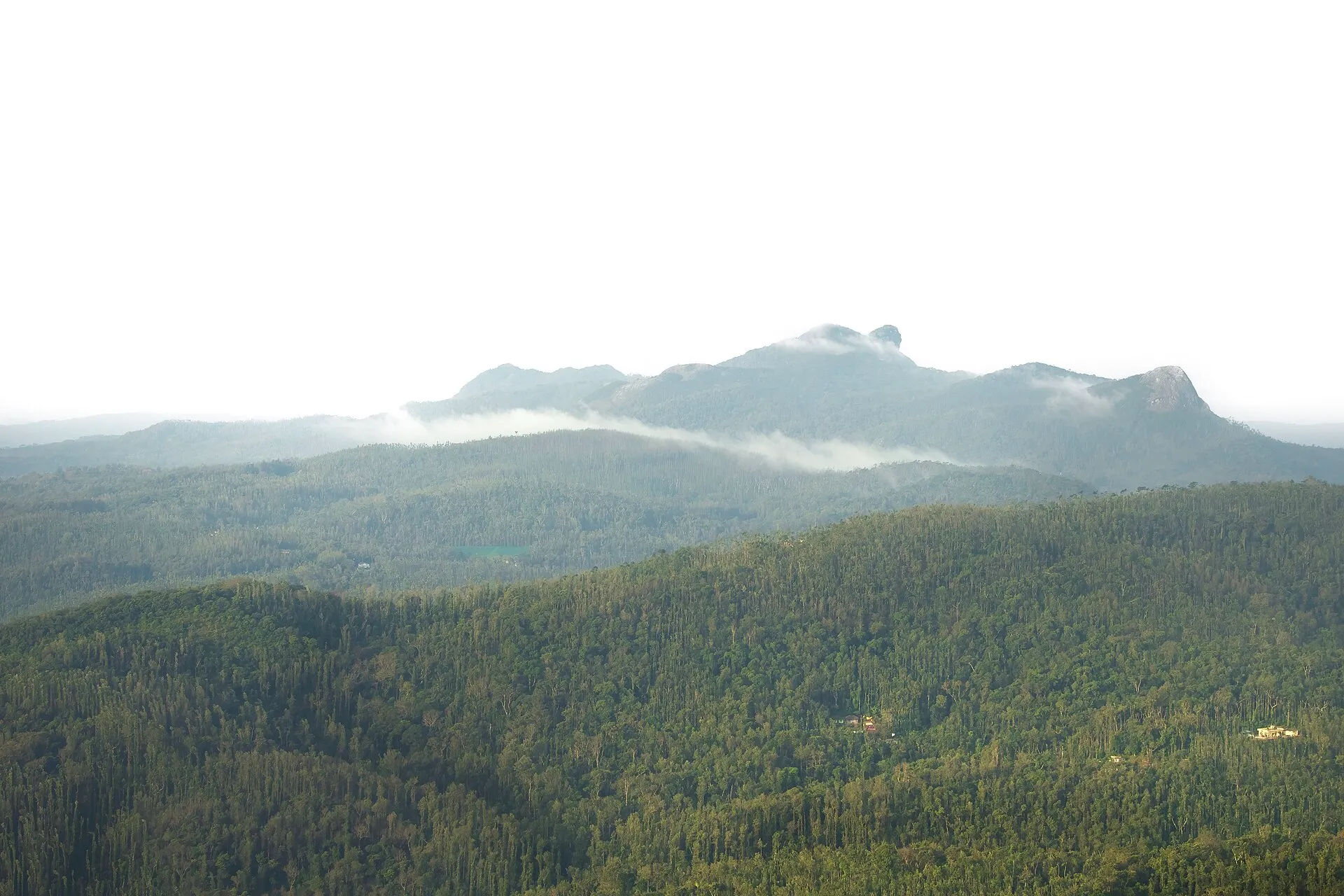
Every June, monsoon clouds sweep in from the Arabian Sea and crash into a long wall of mountains along India’s west coast. Rain pours down for weeks, waterfalls burst from the cliffs, and the forests turn a deep, glowing green.
These mountains are the Western Ghats, called the Sahyadri in Maharashtra. They run for about 1,600 kilometres down India’s western edge [3].
In 2012, UNESCO inscribed the Western Ghats as a World Heritage Site for their natural importance and extraordinary variety of life [1][2].
Older than the Himalayas
UNESCO notes that the Western Ghats are older than the Himalayas, and that they shape the Indian monsoon: forcing the wet south-west winds to rise and drop their rain on the western slopes [1]. That is why the seaward side is so lush, while land to the east, in the “rain shadow”, is far drier.
A treasure house of life
The Western Ghats are one of the richest places on Earth for life, with a very high share of plants and animals found nowhere else [1]. A few of the most famous:
- The lion-tailed macaque, a tree-dwelling monkey with a silver mane and a tufted, lion-like tail, found only in the rainforests of the Western Ghats. Only about 3,000 to 3,500 survive [5].
- The Nilgiri tahr, a cliff-climbing mountain goat and the state animal of Tamil Nadu. It is endangered, and Kerala’s Eravikulam National Park holds its largest population [6].
- The purple frog, which spends almost its whole life underground and comes up to breed for only about two weeks a year. Its closest relatives live in the Seychelles [7].
The flower that blooms once in twelve years
One of the Ghats’ most magical sights is the Neelakurinji (Strobilanthes kunthiana), a shrub that flowers together, in vast numbers, about once every twelve years, turning whole hillsides near Munnar blue-purple. The last great bloom there was in 2018 [4].
What the World Heritage Site includes
The UNESCO listing is not a single park. It is a group of 39 sites in seven clusters across four states, Kerala, Karnataka, Tamil Nadu and Maharashtra, made up of national parks, wildlife sanctuaries and reserve forests [2]. They are remnants of forest that was once continuous [2].
Threats and a long debate
The Ghats are under pressure from deforestation, mining, quarrying, dams, roads and construction, and landslides have turned deadly in some places.
In 2011, a panel led by ecologist Madhav Gadgil recommended that the entire Western Ghats, about 129,037 sq km, be treated as ecologically sensitive, with different levels of protection [3]. A government working group led by K. Kasturirangan reported in 2013 that a smaller area, about 59,940 sq km, should be protected [3]. States still disagree over the boundaries [3].
Exploring the Western Ghats
The Ghats hold some of India’s best-loved places: hill stations such as Mahabaleshwar, Coorg and Munnar; wildlife parks such as Periyar; and countless waterfalls, trekking trails, and tea and coffee estates.
Why it matters
The Western Ghats feed the rivers, shape the rains and shelter wildlife found nowhere else on the planet. Protecting them while meeting the needs of the people who live there is one of India’s great environmental challenges.
Sources
- [1] Western Ghats — UNESCO World Heritage Centre. Accessed 11 October 2026.
- [2] Decision 36 COM 8B.10 — Western Ghats — UNESCO World Heritage Centre. Accessed 11 October 2026.
- [3] Why Western Ghats states can't agree on Eco-Sensitive Areas — Mongabay India. Accessed 11 October 2026.
- [4] Once in a blue bloom: Kerala's famed Neelakurinji set for rare mass bloom — Mongabay India. Accessed 11 October 2026.
- [5] The monkey with a lion's tail — Mongabay India. Accessed 11 October 2026.
- [6] Nilgiri tahr: The cliff-climbing goat — Mongabay India. Accessed 11 October 2026.
- [7] Vocal Behavior of the Elusive Purple Frog of India (Nasikabatrachus sahyadrensis), a Fossorial Species Endemic to the Western Ghats — PLOS ONE (via PubMed Central). Accessed 11 October 2026.
Last updated . Report a correction