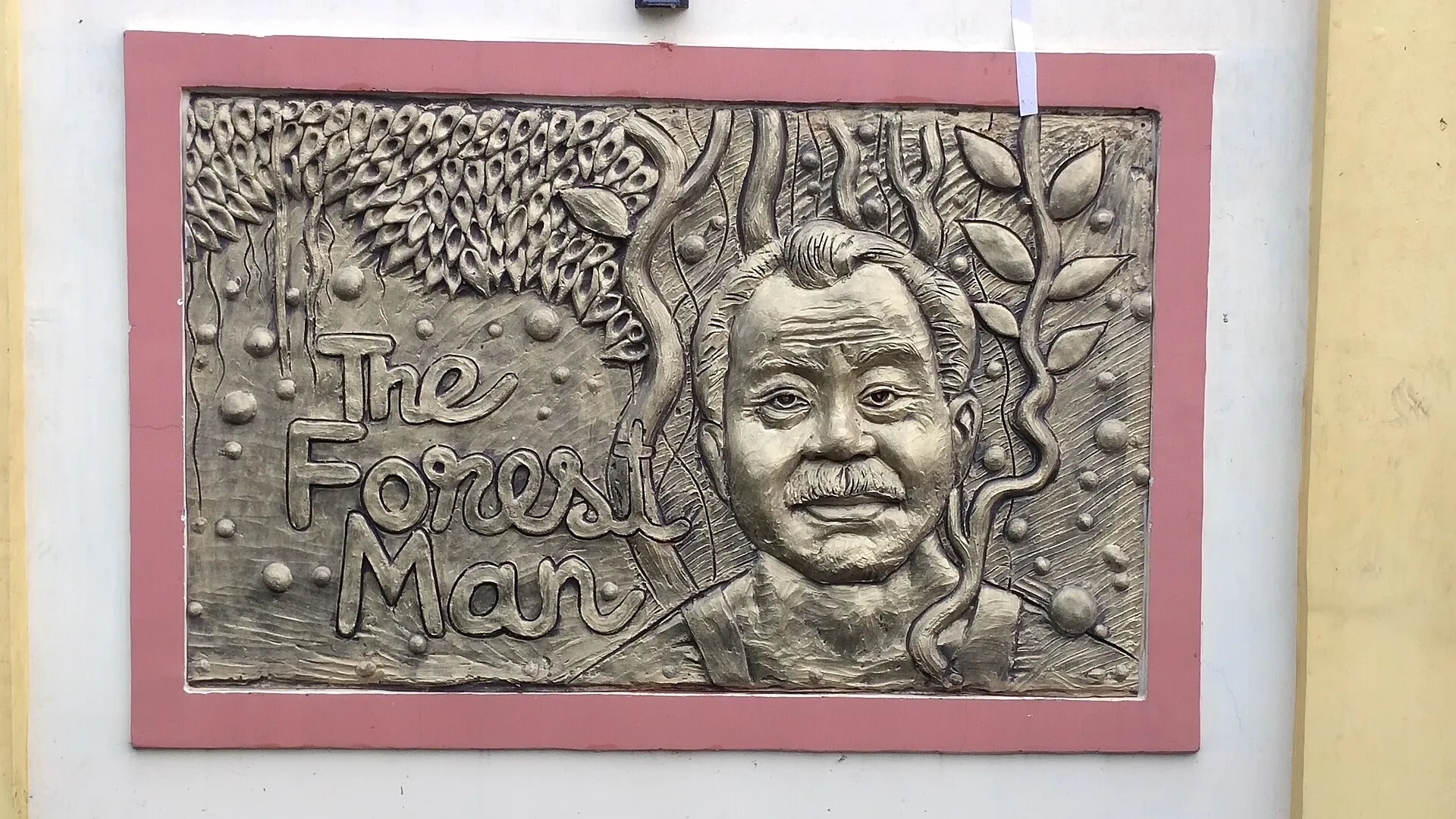
Jadav Payeng
Known as the "Forest Man of India", he turned a bare sandbar in the Brahmaputra into a forest of over a thousand acres, mostly by himself.
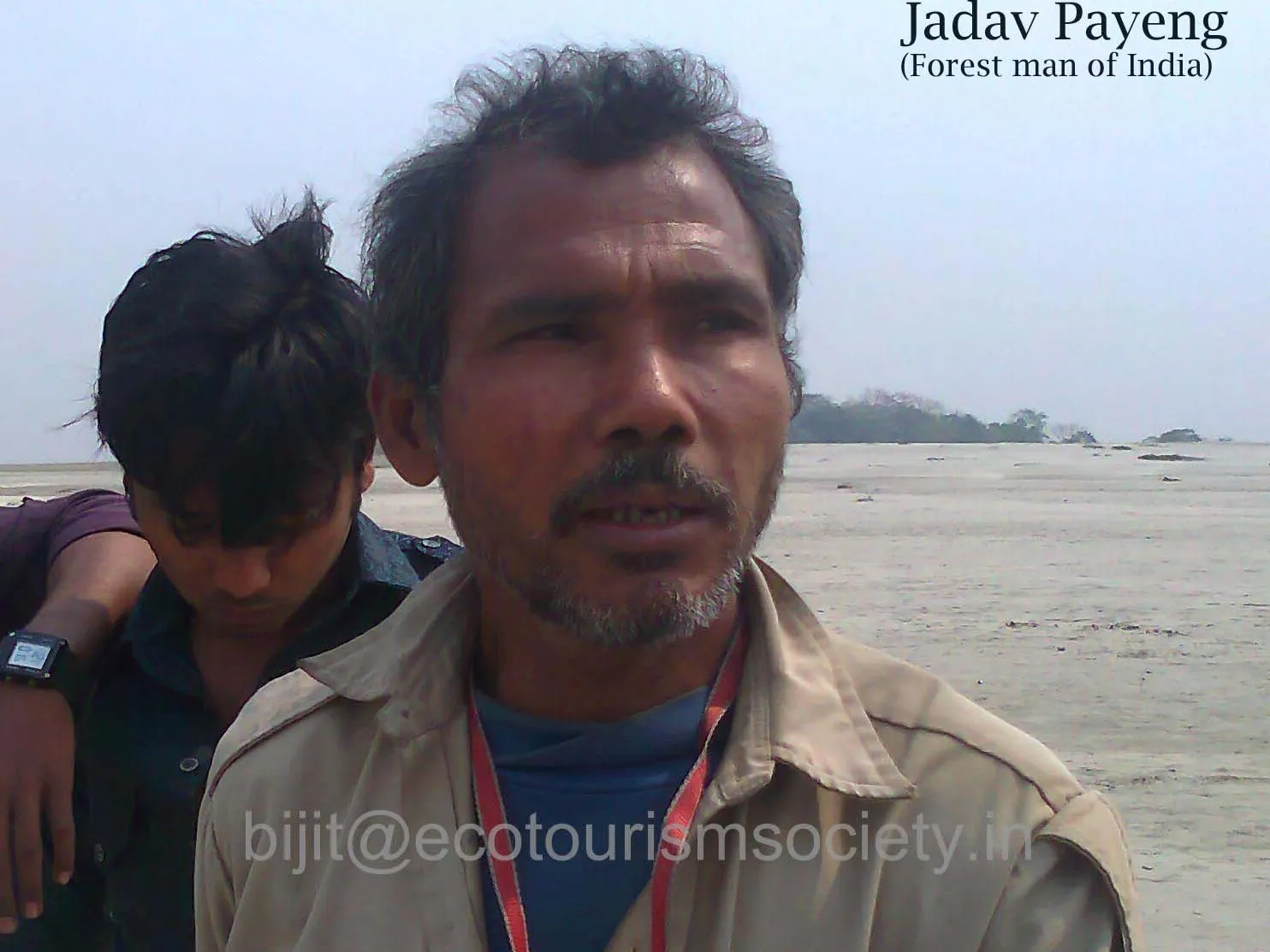
In the middle of the Brahmaputra river in Assam there is a forest that did not exist a few decades ago. Tigers, deer and elephants move through it. Almost all of it was planted by one man, Jadav Payeng, whose nickname “Molai” now names the forest itself.
Where it began
Jadav Payeng is from the Mising (also written Mishing) tribal community, who live along the banks of the Brahmaputra [2]. He grew up as the son of a buffalo trader [2]. The river often floods and shifts, leaving behind sandbars with nothing growing on them.
In 1979, he came across a sight he never forgot: snakes lying dead on the hot sand, killed by the heat because there was no shade anywhere [2]. He told NPR that it made him fear the same fate could one day reach people [2]. So he started to plant, beginning with bamboo [2].
A forest, one sapling at a time
He kept going for decades, often working alone. He has said he planted so many trees that he stopped counting [2]. The forest that grew is known as Molai forest. NPR, which visited in 2017, put its size at about 1,300 acres [2]. A later article in Science Reporter, a magazine of the government’s CSIR-NIScPR, gave a figure of about 1,400 acres [3].
The forest has become a home for wildlife. Visitors have reported tigers, deer, monkeys, elephants and many kinds of birds [2], and Science Reporter also mentions rhinoceroses [3]. Payeng sees himself as carrying on his community’s tradition of respecting nature [2].
Recognition
On 25 January 2015 the Government of India announced the Padma Awards for that year. The Press Information Bureau’s list includes him as “Jadav Molai Peyang”, in the “Others” field, from Assam [1]. (Payeng is the spelling most commonly used for his name.)
His story has since travelled well beyond Assam. Science Reporter notes that he has been invited to speak in several countries, including France and Taiwan [3].
Still planting
Payeng has not stopped. In 2017 he told NPR that he was planting a further area on the island and hoped to see more green along the river [2]. His life shows how much one person’s steady, patient work can change a landscape.
Sources
- [1] Padma Awards 2015 — Press Information Bureau, Ministry of Home Affairs. Accessed 10 October 2026.
- [2] A Lifetime Of Planting Trees On A Remote River Island: Meet India's Forest Man — NPR. Accessed 10 October 2026.
- [3] Padma Shri Jadav Payeng: The Silent Sage Who Painted the Earth Green — Science Reporter, CSIR-NIScPR. Accessed 10 October 2026.
Last updated . First draft prepared with AI assistance; reviewed and fact-checked by a person before publishing. Report a correction