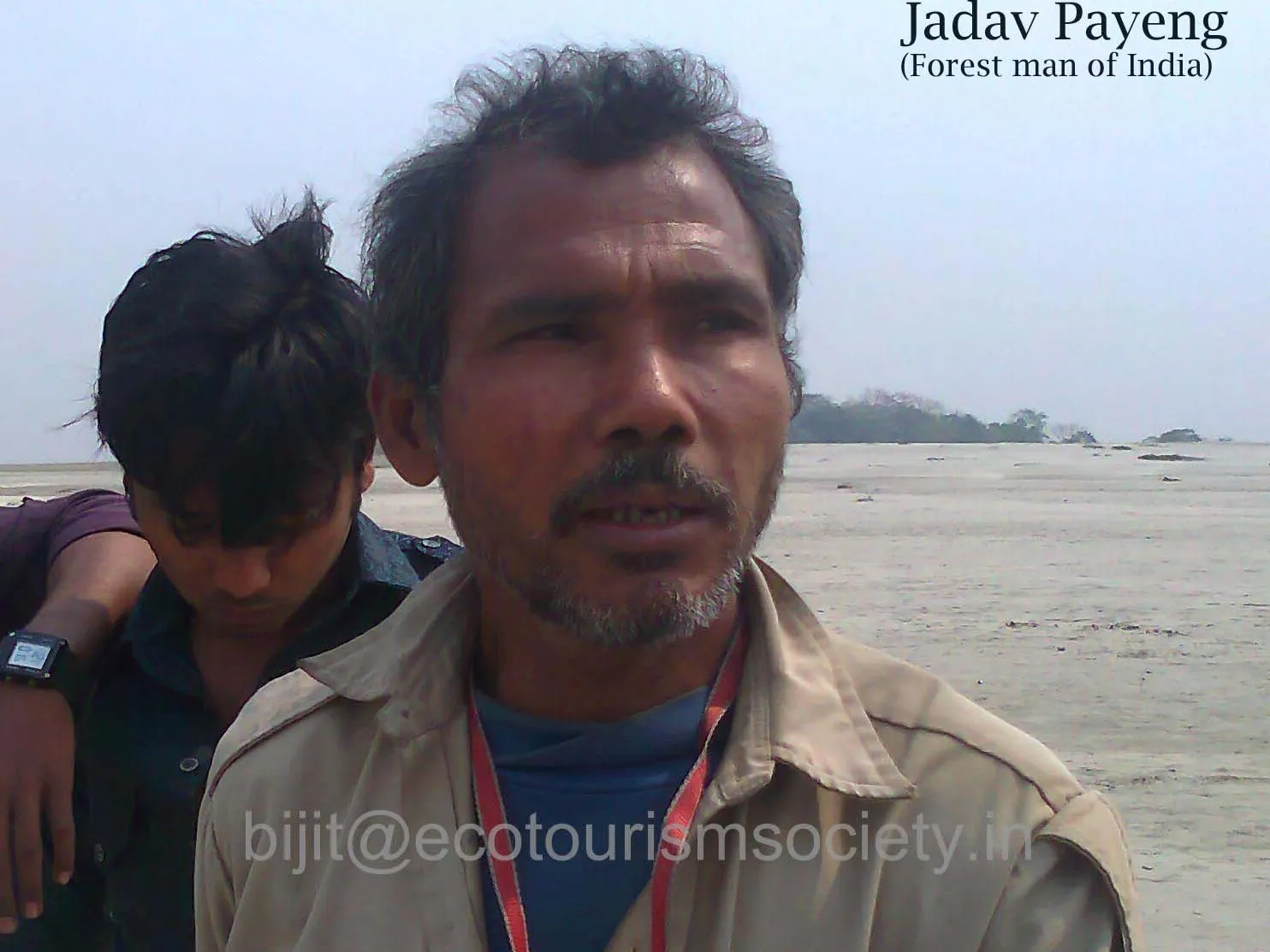
One Man, One Sandbar, Forty Years: How Jadav Payeng Grew a Forest
Starting as a teenager in 1979, Jadav Payeng planted trees on a barren sandbar in Assam. Today it is a forest of more than a thousand acres.
By IndianGaurav team ·
In 1979, a young man walked onto a sandbar in the Brahmaputra river in Assam and found it strewn with dead snakes.
Floods had washed them onto the bare sand. With no trees to give shade, they had died in the heat [4]. The young man, Jadav Payeng, was deeply shaken. He later said the sight made him fear that people, too, could one day die the same way [4].
So he started planting.
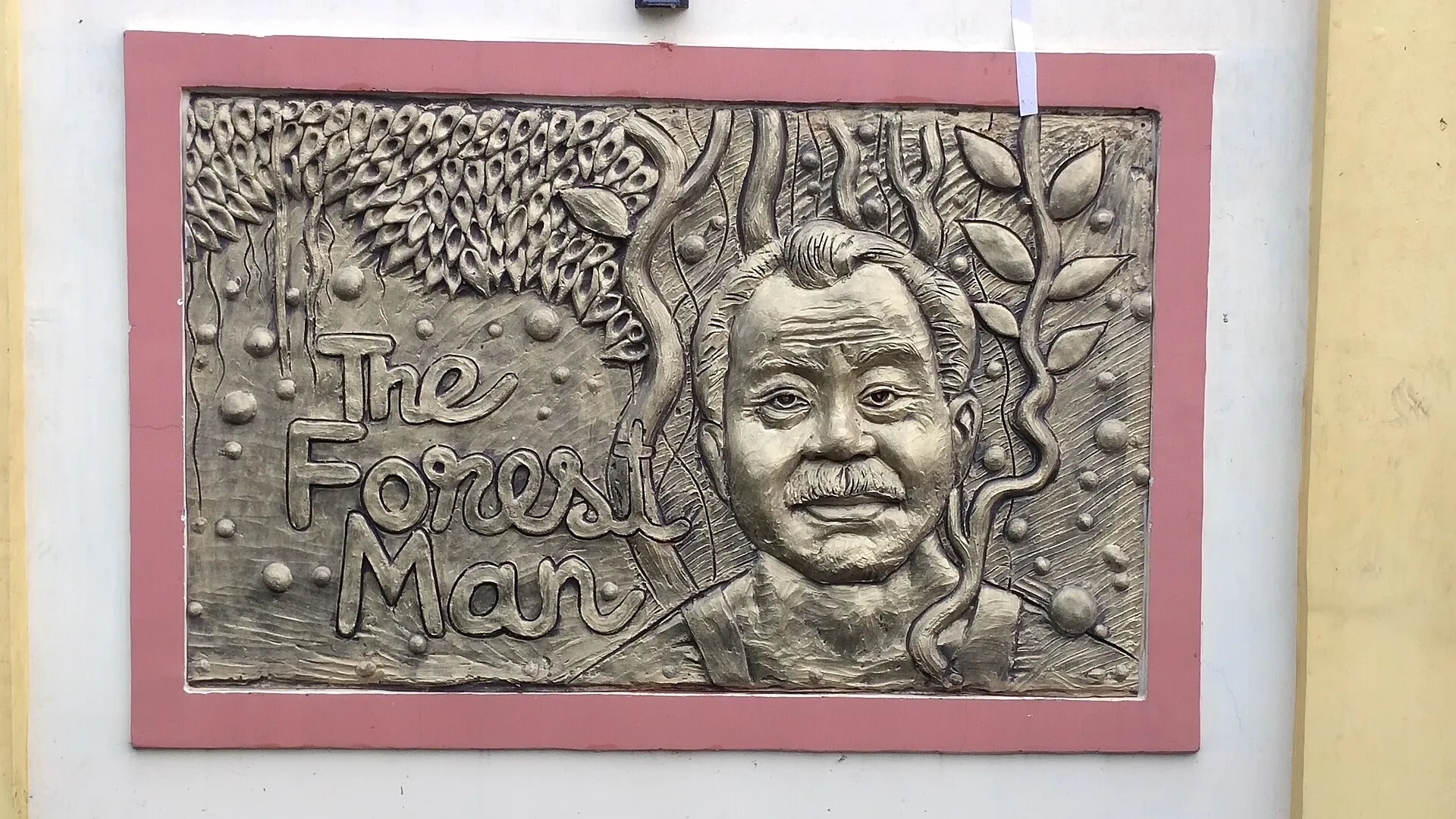
More than four decades later, that barren sandbar has become a dense forest of well over a thousand acres, home to tigers, elephants, deer and many kinds of birds [4][5]. It is named Molai Forest, after Jadav’s nickname, Molai [3][4]. And it was grown, tree by tree, mostly by one man.
A childhood by the river
Jadav Payeng belongs to the Mishing community, an indigenous people of Assam who traditionally live along the banks of the Brahmaputra [1][4]. His father was a buffalo trader [4].
The Brahmaputra is a powerful and unpredictable river. Every monsoon, its floods reshape the land, and sandbars appear and disappear. When Jadav was a boy, the strip of land that became his forest was still joined to the mainland; erosion later cut it off [4].
Planting, alone
After the day he found the dead snakes, Jadav began planting bamboo on the sandbar [1][4]. He asked the elders of his community which plants to grow and how to look after them [4]. To keep young saplings watered, he set up a simple drip system: an earthen pot on a bamboo platform, slowly releasing water onto the plants below [4].
Year after year, through floods and dry seasons, he kept going. He did not have a team, funding or an official title. He had his hands, his patience and his belief that the land could be brought back to life. He has said he planted so many trees that he lost count [4].
Over time, the bamboo was joined by many other kinds of trees, and the forest grew dense and tall [1][3].
The forest comes alive
As the trees grew, wildlife returned. Today, Molai Forest shelters tigers, deer, monkeys and many species of birds, and herds of elephants visit it [4]. Rhinoceroses have also been reported there [3][5].
The forest also helps hold the land together. Tree roots bind the soil and slow erosion, which matters in a river region where islands can be washed away.
Recognised by the world
For many years, few people outside his community knew what Jadav was doing. That changed as journalists and filmmakers found their way to his forest. An internationally acclaimed documentary, Forest Man, told his story to audiences around the world [1][5].
On 25 January 2015, the Government of India announced the Padma Shri for Jadav Payeng, one of the country’s highest civilian honours [2]. The official list names him as “Jadav Molai Peyang”, in the “Others” field, from Assam [2].
Sharing the message
Jadav has been invited to speak at conservation forums in India and abroad [5]. His message is simple: plant trees, protect them, and teach children to love nature. He has spoken about how forests support food security and the lives of animals as well as people [5].
He has not stopped planting either. In 2017 he told NPR that he was planting trees across a much larger area of the island, hoping to spread the green further along the river [4].
What we can learn from him
Jadav’s story holds lessons for all of us, not just for environmentalists.
The first is patience. A forest does not grow in a year or even a decade. Jadav kept planting long before he could see results, trusting that small daily effort would add up.
The second is listening. He did not begin with a grand plan. He began by asking his elders a simple question and acting on their answer.
The third is that you do not need to be powerful to make a difference. He had a clear purpose and the will to keep going when nobody was watching. That combination, it turns out, can grow a forest.
Why Jadav Payeng makes India proud
In a world full of big promises about climate change, Jadav Payeng’s story stands out because it is so simple and so real. He did not wait for anyone’s permission or funding. He saw a problem, asked how to fix it, and spent his life doing just that.
The forest he planted is not just a patch of green on a river island. It is a living reminder that one ordinary person, with patience and love, can change the face of the land.
Sources
- [1] Jadav Payeng — Wikipedia. Accessed 11 October 2026.
- [2] Padma Awards 2015 — Press Information Bureau, Ministry of Home Affairs. Accessed 12 October 2026.
- [3] Molai forest — Wikipedia. Accessed 11 October 2026.
- [4] A Lifetime Of Planting Trees On A Remote River Island: Meet India's Forest Man — NPR. Accessed 12 October 2026.
- [5] Padma Shri Jadav Payeng: The Silent Sage Who Painted the Earth Green — Science Reporter, CSIR-NIScPR. Accessed 12 October 2026.
Last updated . Report a correction