An Australia Every Day: The Remarkable Scale of Indian Railways
Indian Railways carried 741 crore passengers in 2025-26 and has electrified 99.6% of its broad-gauge network. Here is the story of India's lifeline.
By IndianGaurav team ·
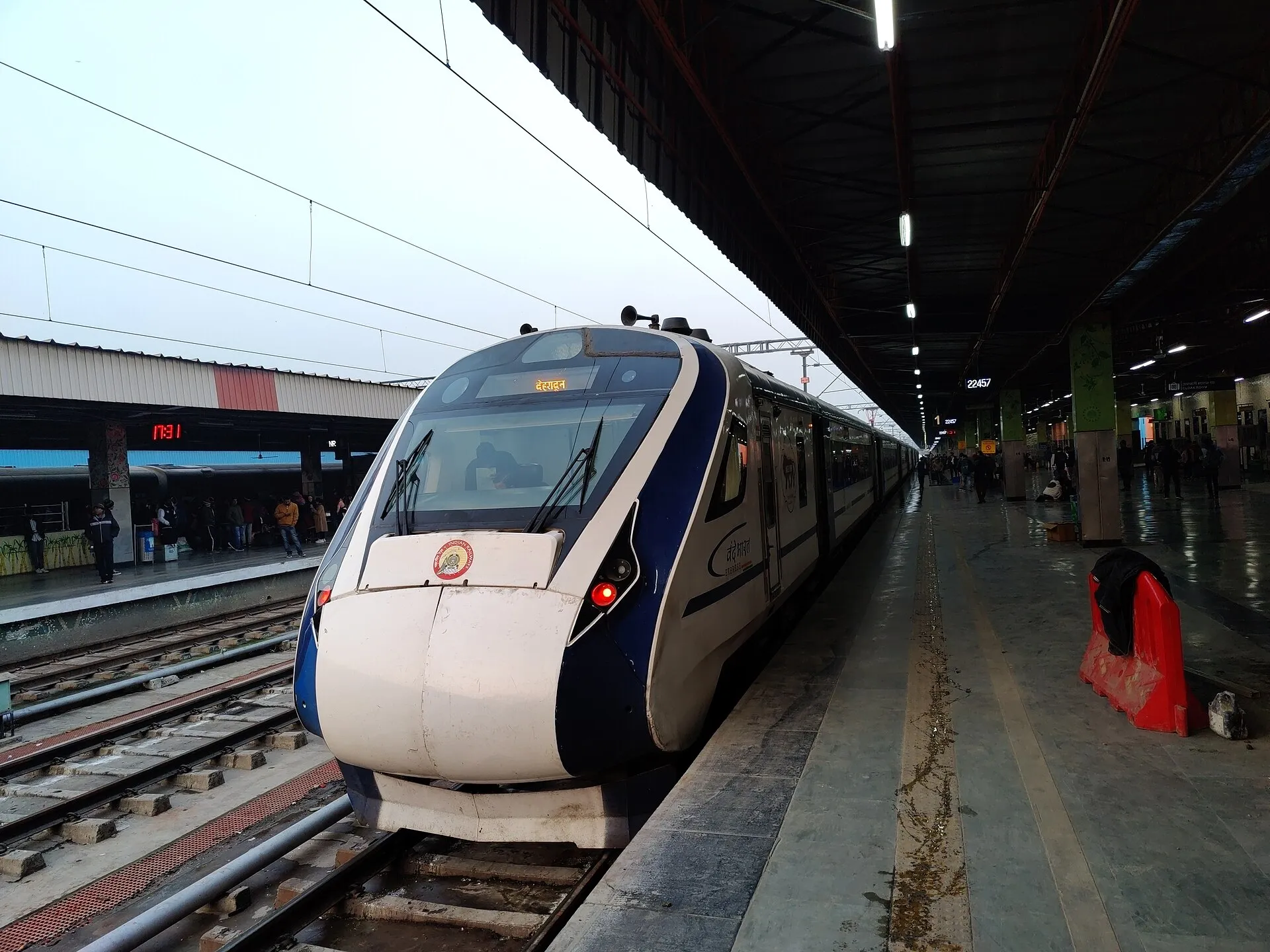
Every day, Indian Railways carries about 2.3 crore passengers, close to the whole population of Australia [2]. In the financial year 2025-26 it made 741 crore passenger journeys and moved a record 1,670 million tonnes of freight, running about 25,000 trains a day [1].
For most Indians, the railway is more than transport. It is where holidays begin, where students leave home for college, where workers head to the cities for jobs, and where strangers share food and stories across long journeys.
The first train
India’s first passenger train ran on 16 April 1853, from Bori Bunder in Bombay (now Mumbai) to Thane, a run of a little over 30 kilometres [3].
Over the next century, lines spread across the subcontinent. They were built first to serve the colonial economy, carrying raw materials, goods and troops. But Indians soon made the trains their own: pilgrims, traders, families and, later, leaders of the freedom movement all travelled by rail.
A network that spans the country
Today the network covers more than 68,000 route kilometres and 7,325 stations [2]. Its trains run from the deserts of Rajasthan to the tea gardens of Assam, and from the Himalayan foothills to the backwaters of Kerala.
Almost fully electric
The biggest change of the last decade has been the switch from diesel to electric power.
In 2014, about 20 per cent of the network was electrified. By March 2026, 99.6 per cent of the broad-gauge network was electric, covering 69,873 route kilometres [1]. Government figures put the UK at 39 per cent, Russia at 52 per cent and China at 82 per cent [1].
Electric trains cost less to run and pollute less. In 2024-25, the railways reported saving about 180 crore litres of diesel, worth around ₹6,000 crore [1].
Faster, safer, more modern [1]
- Vande Bharat Express. These semi-high-speed trains are designed and built in India. Since their launch they have carried more than 9.1 crore passengers, and a sleeper version for overnight journeys started in January 2026.
- Amrit Bharat Express. Trains meant to give ordinary passengers more comfort at affordable fares. Sixty services were running by March 2026.
- Kavach. India’s own automatic train-protection system, built to prevent collisions, is working on more than 3,100 route km, with work under way on another 24,400 km.
- Better track. The length of track fit for speeds above 110 km/h has grown from about 31,000 km to more than 85,000 km.
Engineering wonders
The railways have also built some remarkable structures. Read our stories on the Chenab Rail Bridge in Jammu and Kashmir and the New Pamban Bridge in Tamil Nadu.
Heritage on rails
Three hill lines together make up the Mountain Railways of India, a UNESCO World Heritage Site [4]:
- the Darjeeling Himalayan Railway in West Bengal
- the Nilgiri Mountain Railway in Tamil Nadu
- the Kalka–Shimla Railway in Himachal Pradesh
In Mumbai, the Victorian Gothic Chhatrapati Shivaji Terminus is a World Heritage Site in its own right [5].
Freight: the quiet engine of the economy
Passenger trains get the attention, but goods trains matter just as much. Coal for power stations, iron ore, cement, food grains, fertiliser and containers all cross the country by rail, and every tonne moved by train instead of truck saves fuel and eases pressure on the highways. The record 1,670 million tonnes carried in 2025-26 shows how much of the economy rides on the rails [1].
Why it matters
Running a railway this size, for this many people, every day, is a huge feat of organisation. From a short line out of Bombay in 1853 to an almost fully electric network carrying crores of passengers a year, the story of Indian Railways is the story of India on the move.
Sources
- [1] Indian Railways reach 99.6 pc electrification, transports 741 crore passengers in 2025-26 — IANS. Accessed 11 October 2026.
- [2] Did you know? Indian Railways moves 23 million passengers daily — Business Today. Accessed 11 October 2026.
- [3] 150 Years of Indian Railways (backgrounder) — Press Information Bureau, Government of India. Accessed 11 October 2026.
- [4] Mountain Railways of India — UNESCO World Heritage Centre. Accessed 11 October 2026.
- [5] Chhatrapati Shivaji Terminus (formerly Victoria Terminus) — UNESCO World Heritage Centre. Accessed 11 October 2026.
Last updated . Report a correction